Can You Do This Yourself
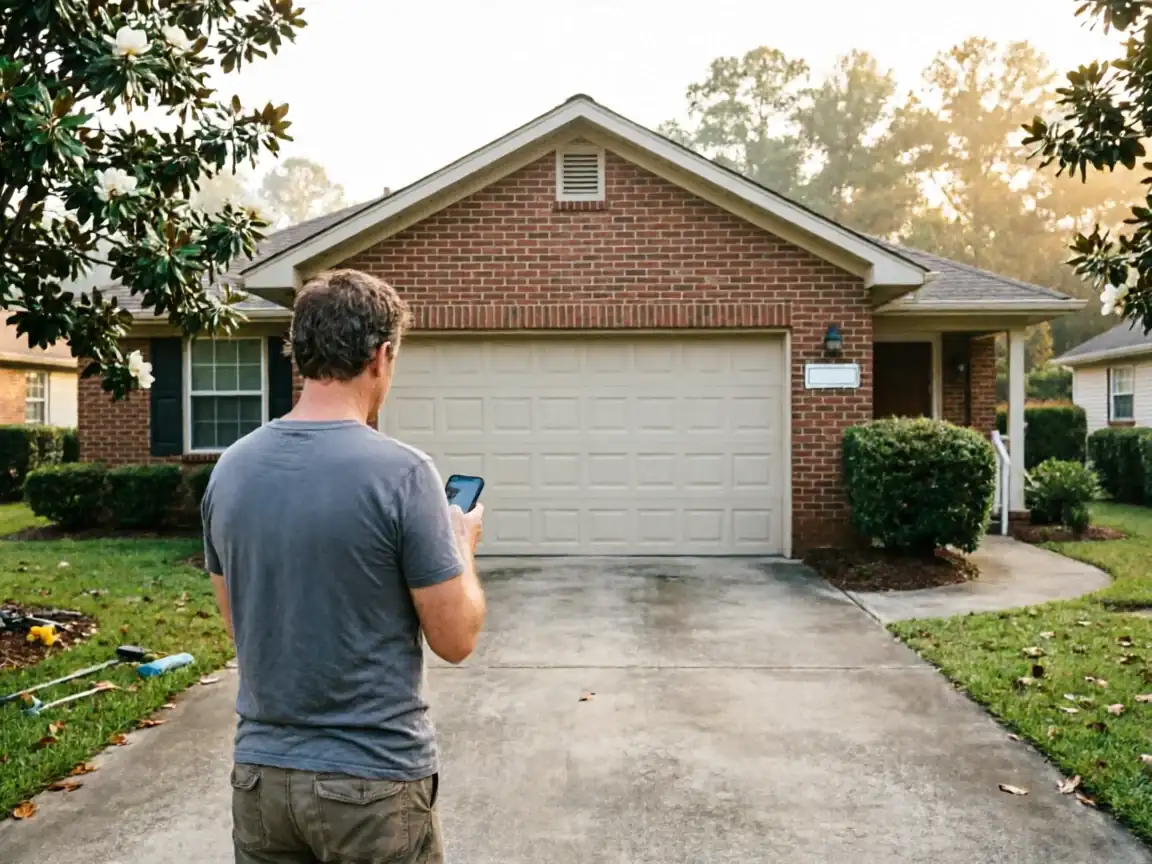
If your opener won't respond to the remote or wall button at all, check the obvious first: is it plugged in, has the outlet tripped, did a breaker flip. That's five minutes, no tools. Past that, you're into gear and sprocket work, logic board diagnosis, or travel-limit adjustment, and that's where DIY stops making sense.
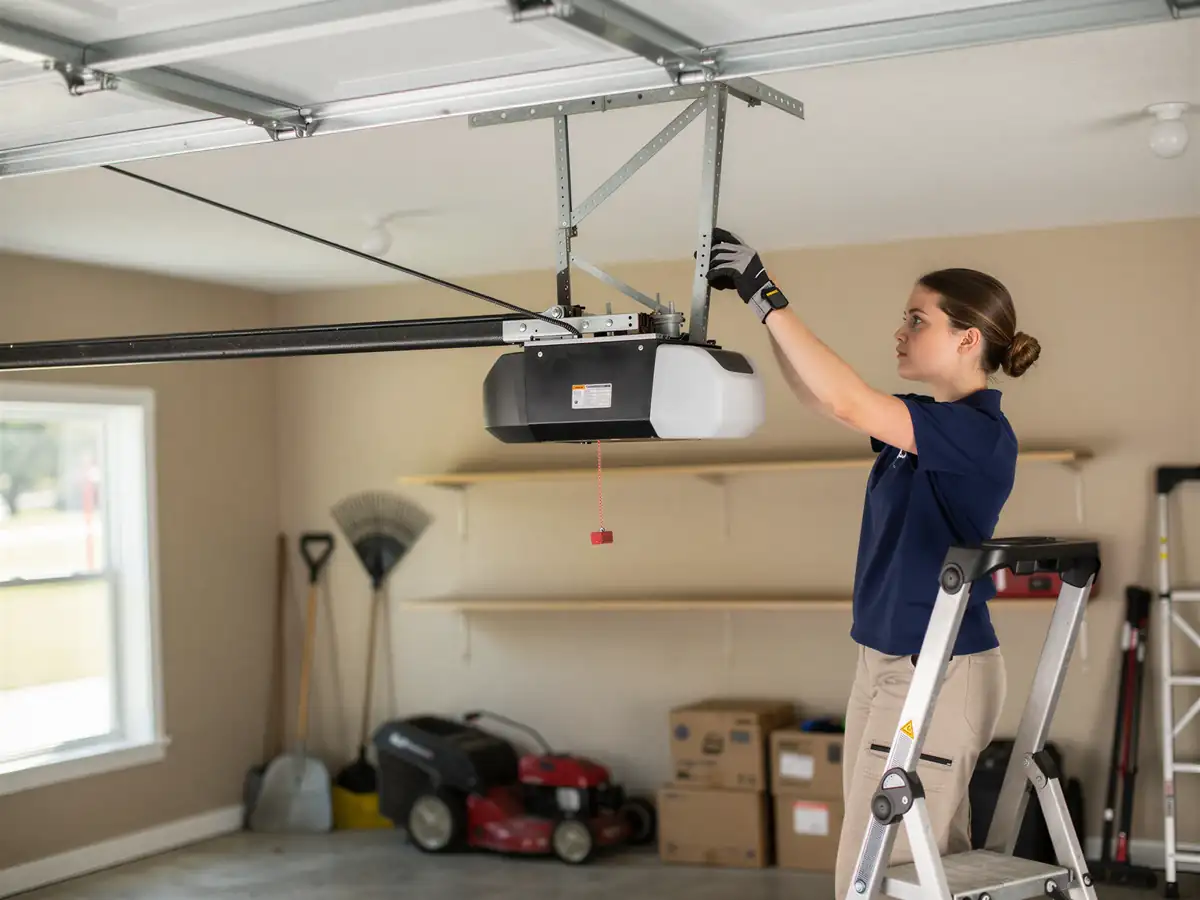
North Decatur's housing stock centers on 1974, well ahead of the wider service area's 1984 median. A lot of these homes are on their second or third opener by now, but the garage structure and door track underneath may still be original. That mismatch - an older bay with a newer motor bolted onto it - is exactly where amateur swaps go wrong. Bracket holes don't line up, the header isn't reinforced for the unit's weight, or the existing rail sits at the wrong angle for a direct-drive replacement.
If you're comfortable replacing a remote battery or re-programming a keypad code, do it. If you're pulling the motor housing open or rewiring a wall control, that's a call, not a weekend project. We're honest that some of this work doesn't require us - we'd rather you save the trip charge on a $4 fix.
How It Shows Up
The most common complaint we hear from this area is a door that opens fine but won't close
Or reverses halfway down. On houses built around 1974, that's often a worn drive gear inside a chain-drive unit that's been running for fifteen-plus years, or a safety sensor whose alignment has drifted after decades of settling in the slab.
Others report a motor that hums but doesn't move the door
The gear has stripped, a known failure point on older chain and screw-drive units once the nylon gear inside wears through. Some owners notice the opener working intermittently in cold weather, which tracks with this area's cold-moderate climate band: lubricant thickens, logic boards get sluggish, and a marginal capacitor fails to kick the motor over on the first try.
We also see openers that simply go silent
No light, no hum, nothing - which usually points to a dead circuit board rather than the motor itself. On a unit old enough to match this area's housing age, board replacement often costs more than it saves.
What Causes It Around Here
The housing age is the whole story for North Decatur. A 1974 build means openers here have gone through at least one full replacement cycle, sometimes two, and the garages themselves were framed for an earlier generation of hardware - lighter doors, simpler chain-drive units, no battery backup, no Wi-Fi module.
When a homeowner upgrades to a modern belt-drive or smart opener without checking the header and door weight, the new unit works the motor harder than it was built for. That shortens gear life and burns out capacitors faster than the manufacturer's spec sheet assumes.
Colder stretches add to it. In this climate band, grease inside the gear housing stiffens, chains stretch slightly, and sensors mounted near a drafty door seam lose alignment more than units in a sealed, modern garage would. None of that is dramatic, but it adds up to the same handful of failures showing up year after year on houses of this vintage.
How Long It Takes
A straightforward fix - sensor realignment, logic board reset, travel limit adjustment - is usually done in under an hour once we're on site. A full motor or gear replacement takes longer, typically most of a visit, since we're also checking the mounting bracket and rail alignment on a garage built to 1970s-era framing.
We travel to North Decatur from Roswell, about 16 miles out, so factor that into scheduling rather than expecting a same-hour arrival. We'll give you a window when you call, not a guess.
If parts need ordering - a specific logic board or a gear kit for an older unit - that adds time beyond the visit itself. We'll tell you upfront if your opener's model is one we can fix same-day or one that needs a part shipped first.
Parts We Carry
We stock the components that fail most often on openers from this era and climate
Drive gears and sprockets for chain-drive units, safety sensor pairs, logic boards for common residential models, and capacitors. These cover the bulk of calls we get from houses built in the 1970s and 80s, which describes most of North Decatur.
What we don't stock is every proprietary board for every smart-opener brand on the market
If your unit is a newer Wi-Fi-enabled model with a manufacturer-specific control board, we may need to order that part rather than pull it off the truck. We'll tell you straight when that's the case instead of promising a same-visit fix we can't deliver.
For openers old enough that the manufacturer no longer makes parts at all
Replacement is usually the honest answer, not repair. We'd rather say that upfront than keep patching a unit that's going to fail again in six months.
How We Fix It
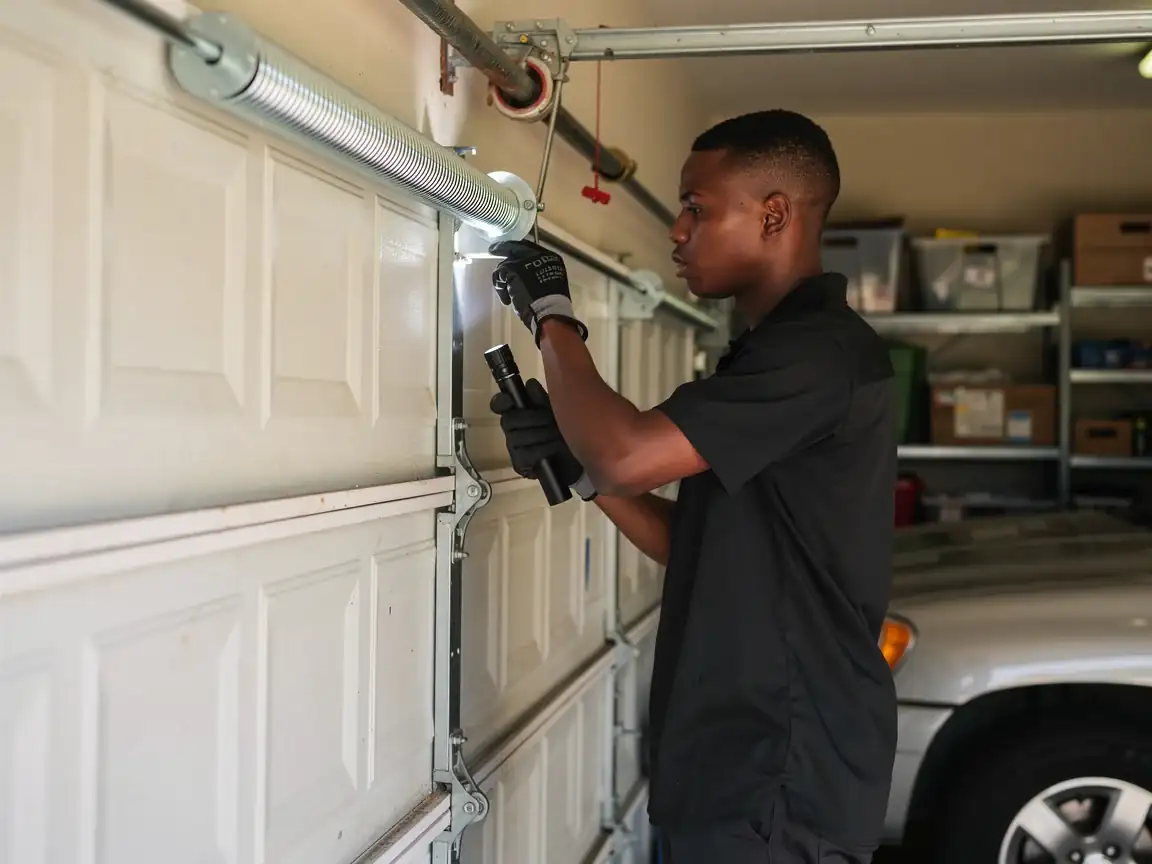
We start by testing the motor, the logic board, and the sensors separately, since on a unit this old the failure is rarely just one part - it's usually two things wearing out close together. We check the mounting bracket against the garage's original framing, since 1970s-era headers weren't always built for today's opener weights.
If the fix is a gear, sensor, or capacitor swap, we handle it on-site from stock. If it's a full motor replacement, we match the new unit to the existing rail and door weight rather than defaulting to whatever's newest, since an oversized opener on an old track strains the hardware instead of solving the problem.
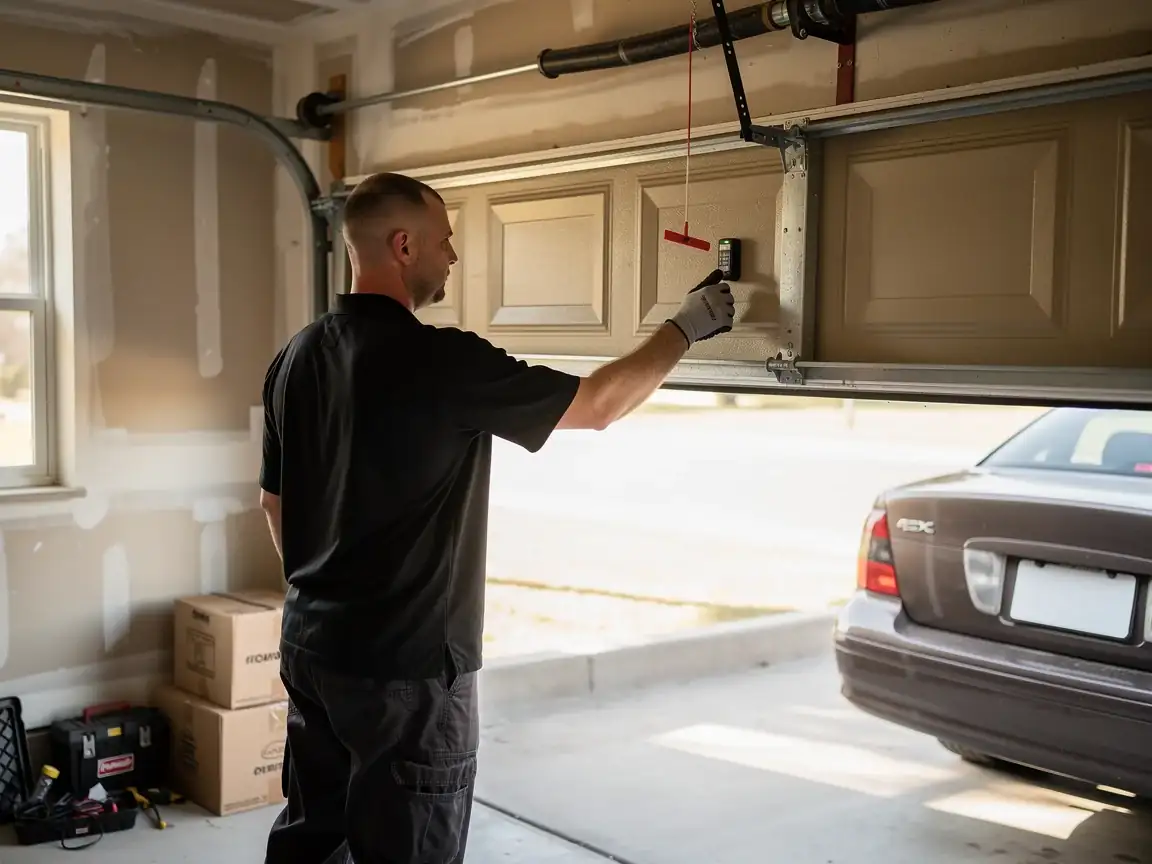
We test the full open-close cycle, including auto-reverse safety, before we leave. For full details on what we cover across the broader service area and other repairs beyond openers, see our garage doors page for North Decatur or our general opener repair page for Roswell.