What It Costs
We're not going to throw a number at you here, because a broken spring job and a bent track job are not the same repair, and the doors we see around Roswell span housing built anywhere from 1951 up through the 2000s, with most of it dating to the 1980s and 90s. A door's age, the hardware it was built with, and whether the opener is original all change what's actually wrong with it. What we can tell you is that we look at the door in person before we quote anything, because guessing over the phone on a torsion spring size or a track bend leads to a wrong number and a wasted trip. If you want a real figure, call and describe what the door is doing - grinding, stuck open, sagging on one side - and we'll tell you honestly whether it's a quick fix or something bigger.
How It Shows Up
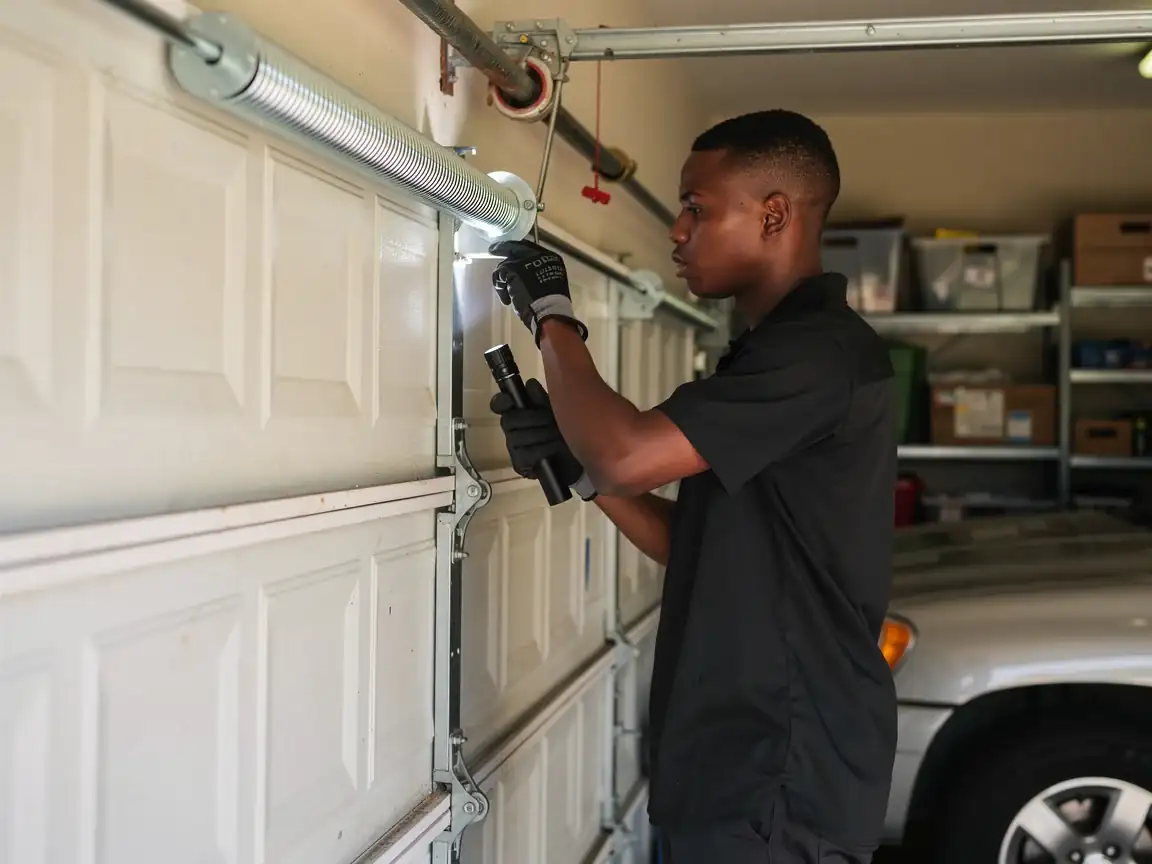
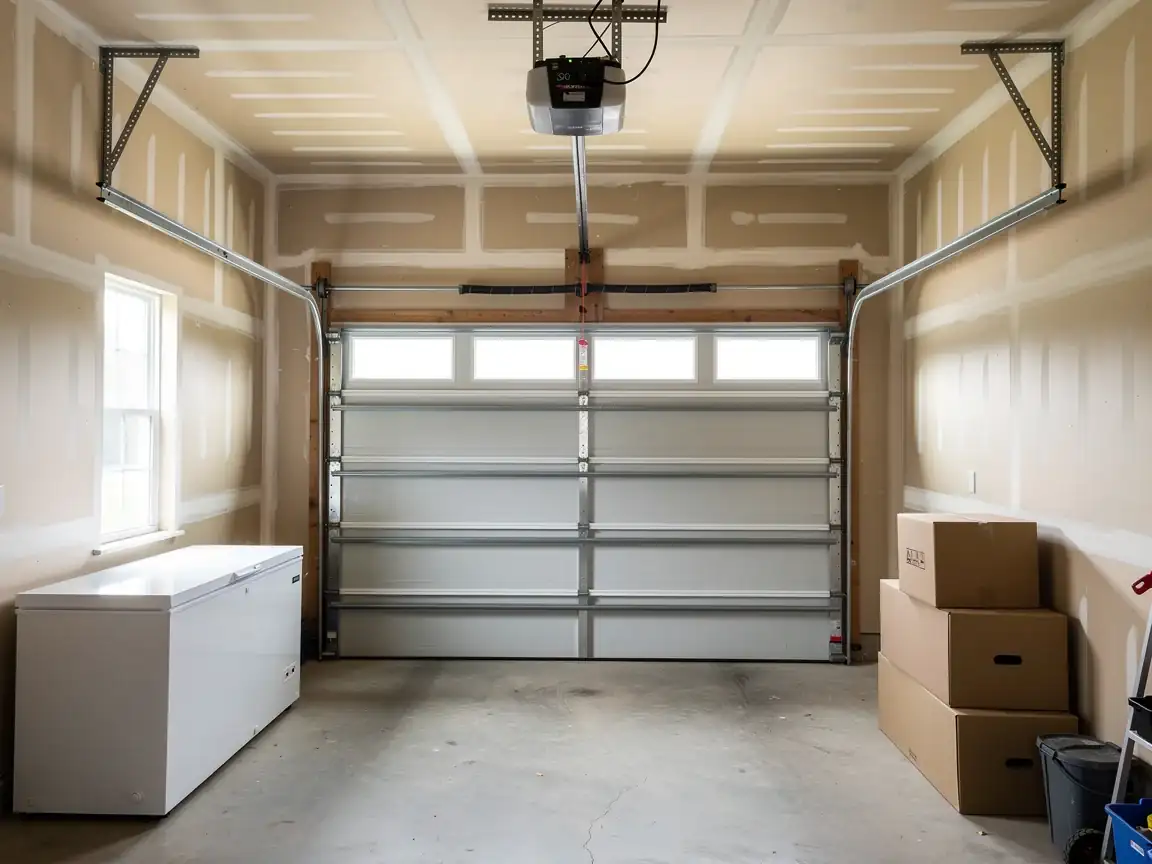
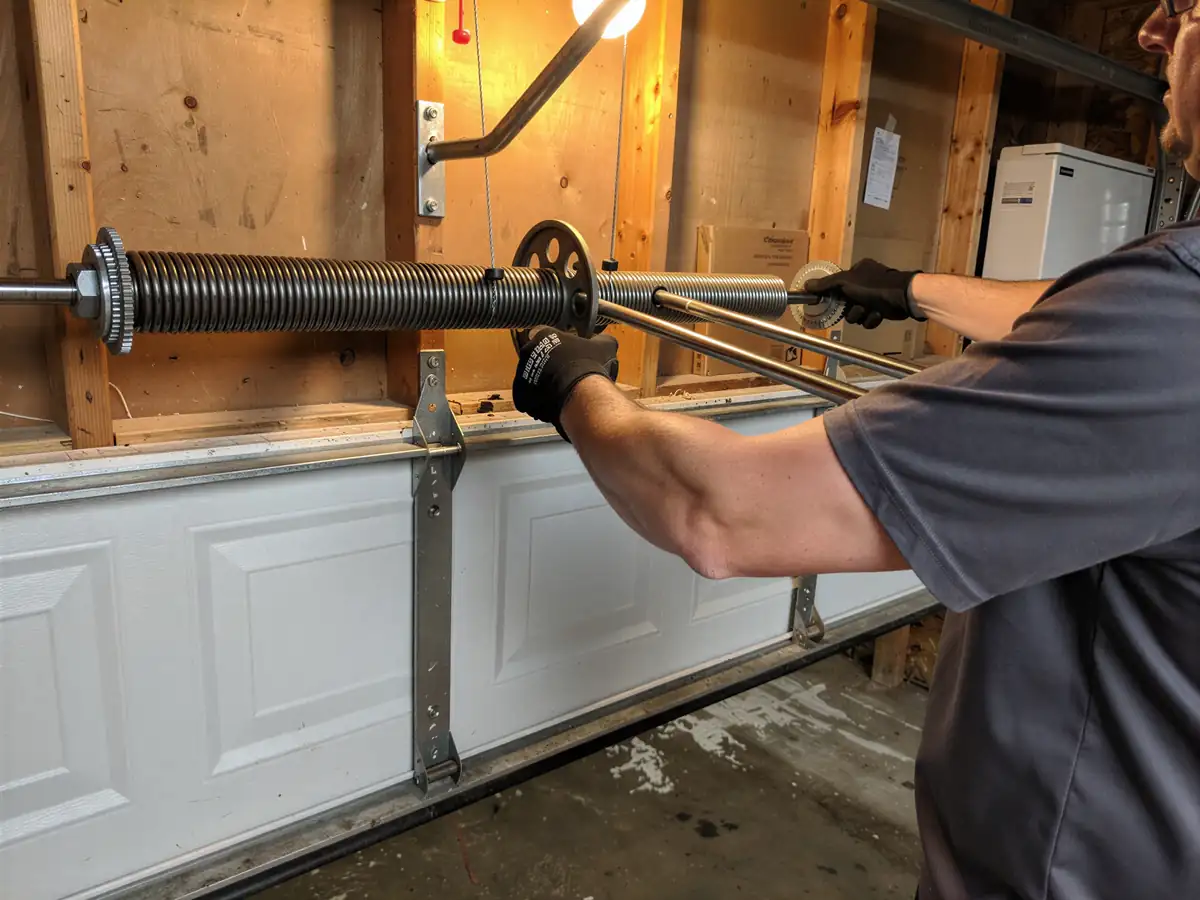
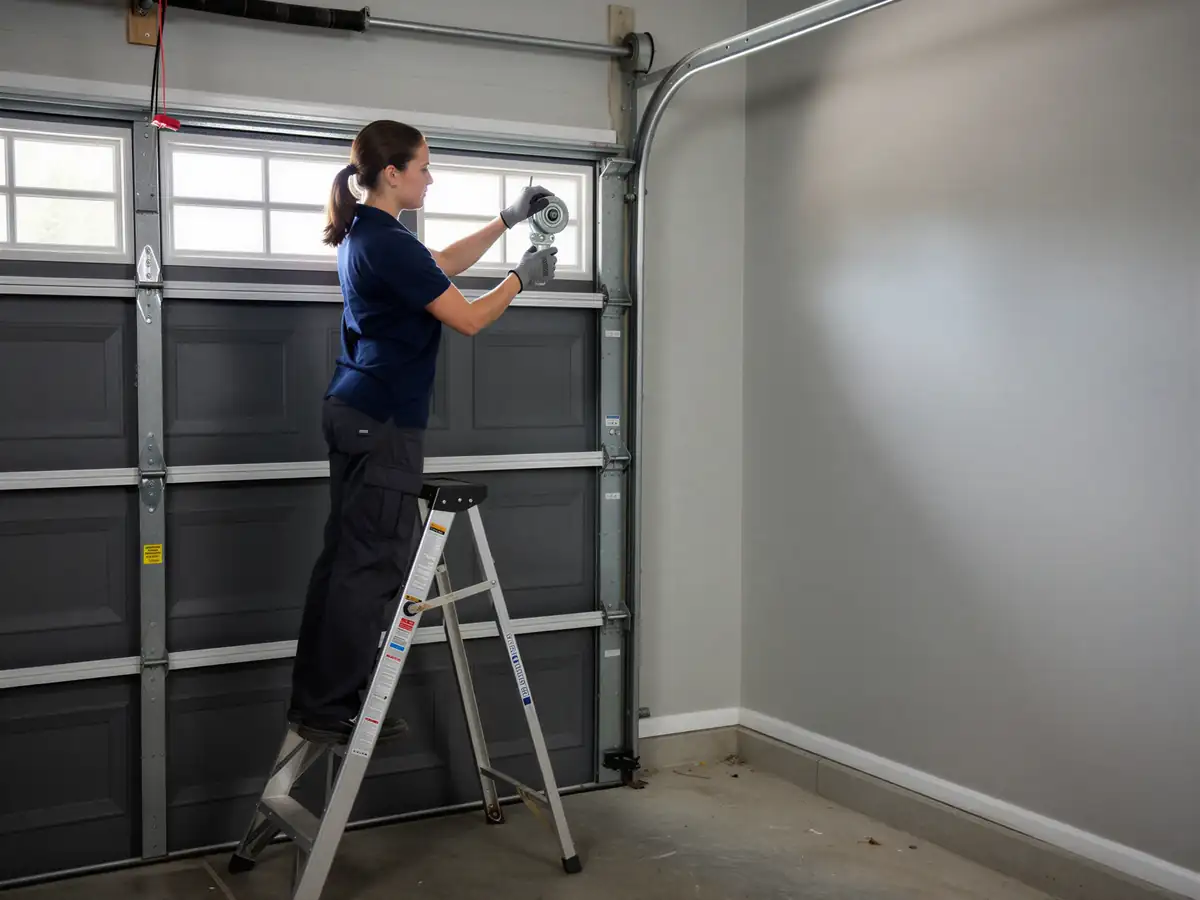
The most common call we get is a door that won't close all the way, or one that reverses halfway down for no obvious reason - usually a misaligned sensor or a track that's shifted slightly out of plane. Next most common is the loud bang or pop followed by a door that won't lift at all, which almost always means a broken torsion spring. Some owners notice it gradually: the door gets heavier to lift by hand, the opener strains and groans before it moves, or one corner drags lower than the other on the way up. On older builder-grade doors common across Roswell's 1980s and 90s housing stock, you'll also see rollers wearing unevenly in their tracks, since the original steel rollers weren't built for decades of daily cycles.
What Causes It Around Here
Roswell sits in a cold-moderate climate band, and that matters more than people think for a garage door. Steel panels and track brackets contract and expand with the yearly temperature swing, and on a door that's original to a house built in the 1980s or 90s - which describes most of the housing stock across this area - those repeated cycles work screws loose, stiffen lubricant, and eventually bind rollers in the track. With 47,174 owner-occupied houses across this service area built mostly in that same era, a large share of the repair calls we take are the same failure on the same generation of hardware: original torsion springs nearing or past their cycle life, and tracks that have slowly drifted out of alignment after twenty-plus winters of expansion and contraction. It's less about bad luck and more about a predictable age curve.