How Local Conditions Play In
Roswell houses were mostly built between 1951 and 2007, with the median landing around 1984, and across the 21 named areas we cover the stock leans hard into 1980s and 90s construction. That matters because track hardware from that era was hung with lag screws straight into the jamb framing, not the sleeve anchors you'd see in newer builds. Thirty-plus years of house settling moves those jambs a little every year, and the track moves with them.
Roswell sits in a cold-moderate climate band. It's not hard-freeze country, but there are enough freeze-thaw cycles each winter to work a loose bracket looser, a sixteenth of an inch at a time, until one day the roller catches wrong and the door walks off the rail instead of rolling smooth. This isn't a dramatic failure. It's a slow one, and most owners don't notice until the door binds on one side or a panel buckles under spring tension pulling against a track that's no longer square.
Homes from the 1984 median year were almost never hung with a safety cable on the bottom bracket, which means a track that lets go on one of these older installs can drop a section rather than just stall out.
What to Look At First
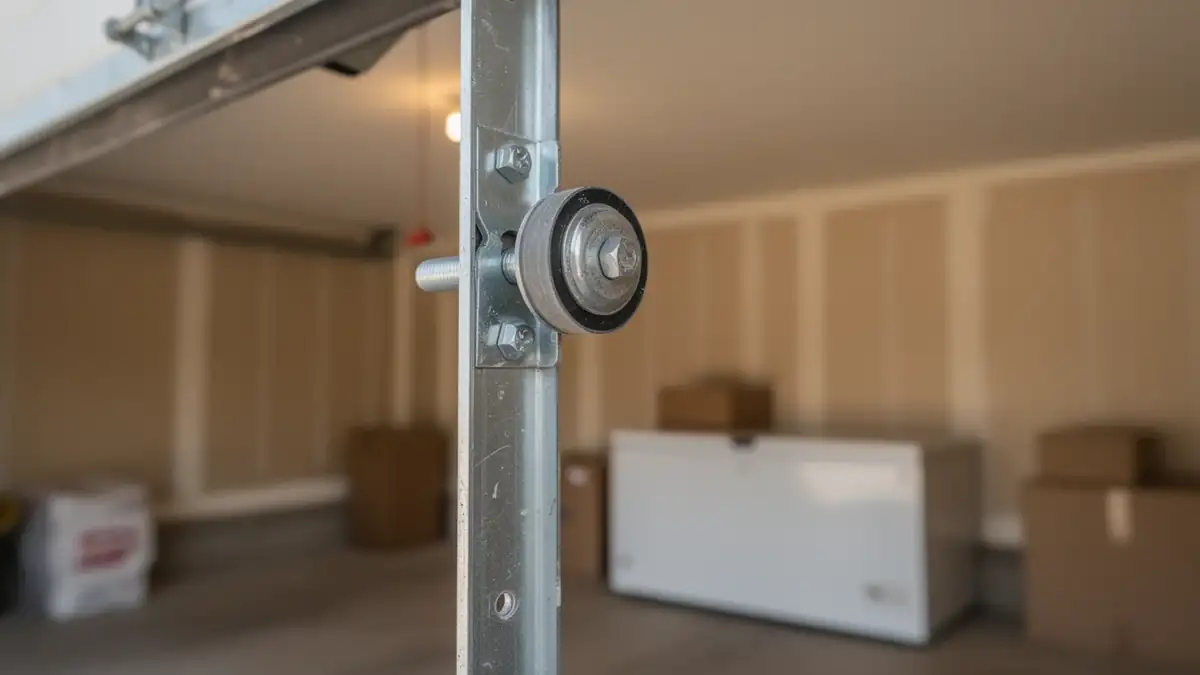
Start at the brackets, not the rail
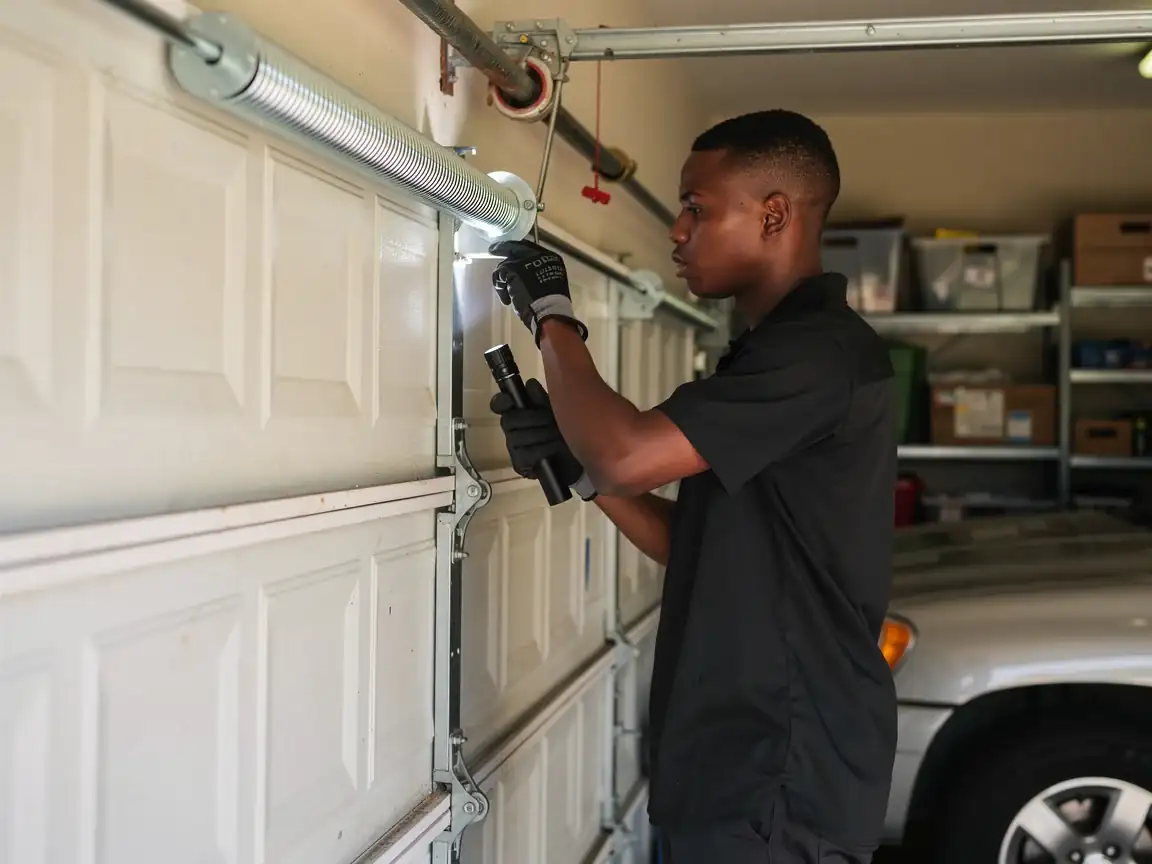
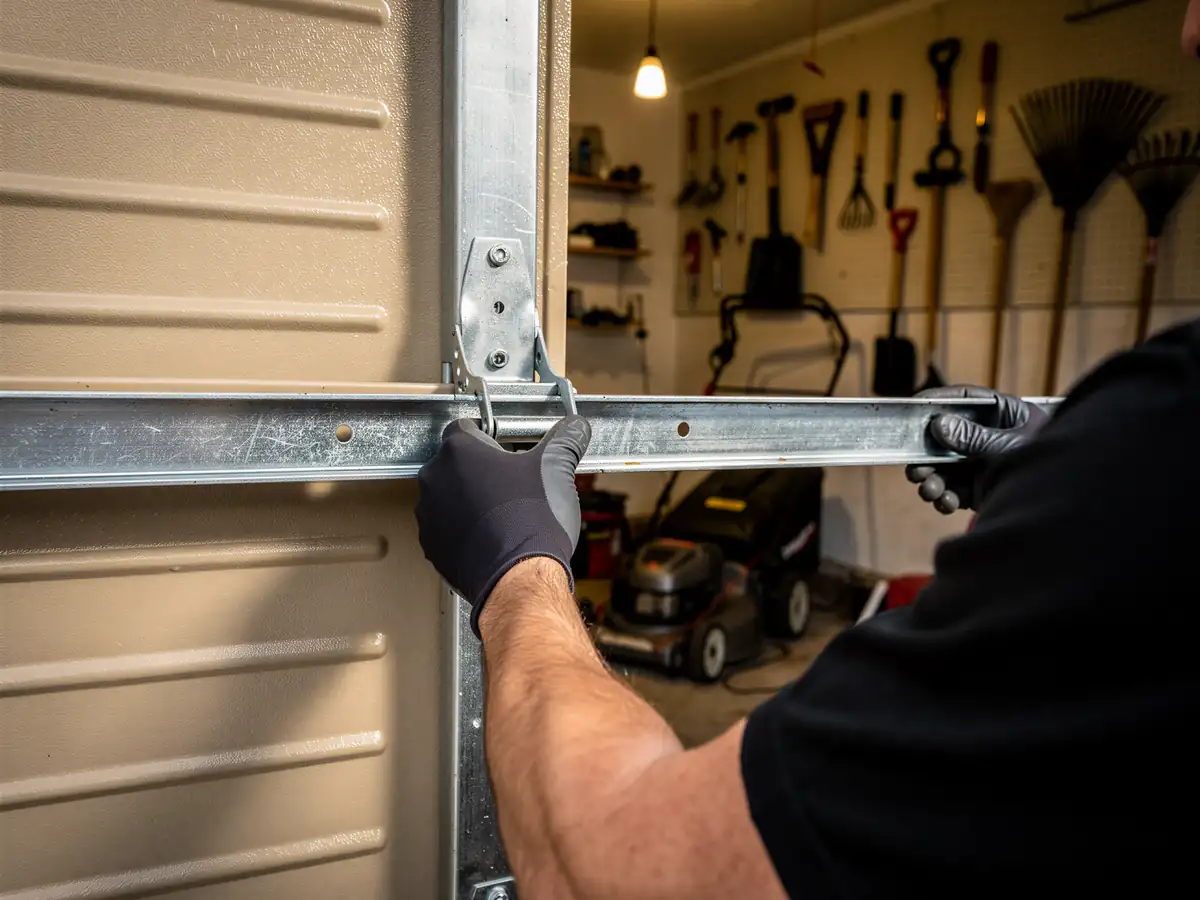
On houses from this era, the jamb bracket is lag-screwed into wood that's had decades to shrink and flex, and a bracket pulled even a quarter inch out of plumb throws the whole track off square. Look for daylight between the bracket and the jamb, or screws backed out far enough to wiggle by hand.
Next check the rollers
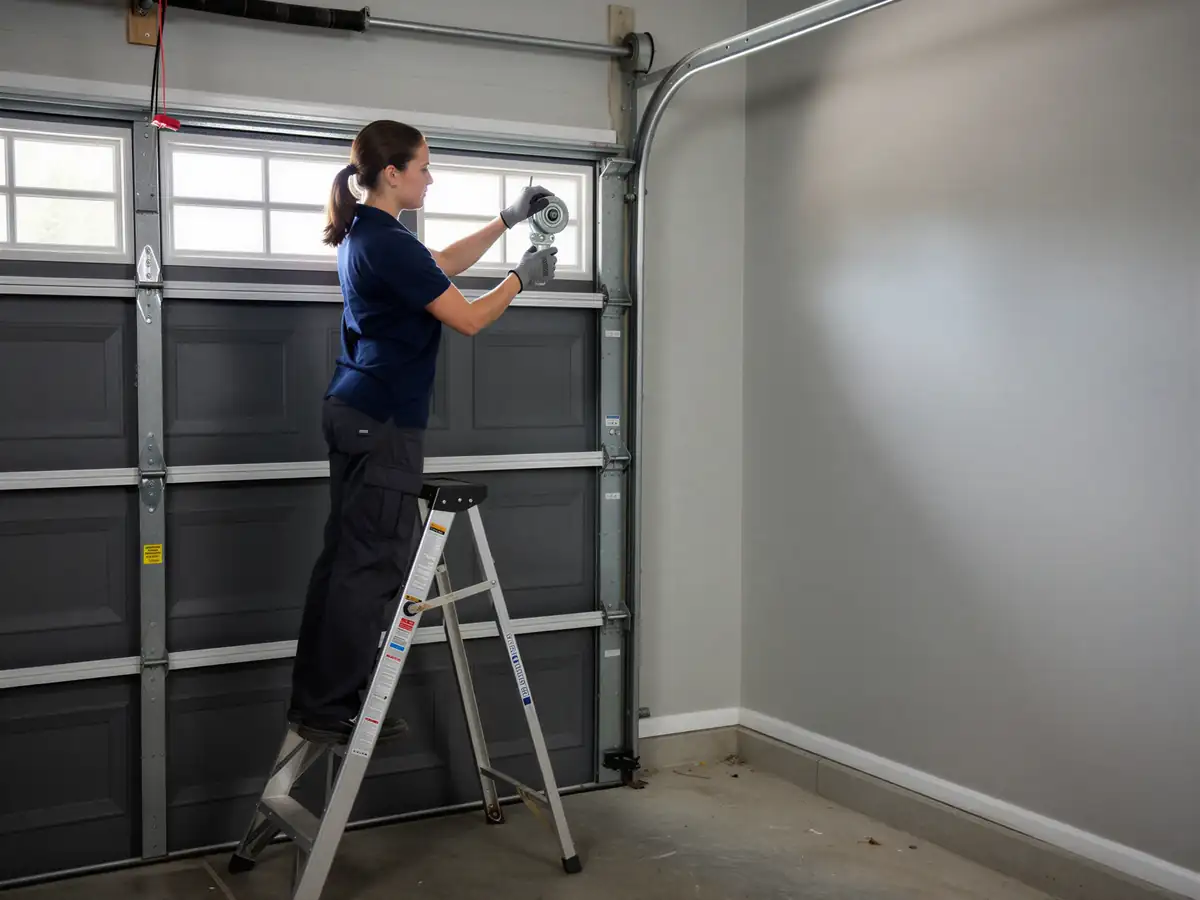
Steel rollers from original 80s and 90s installs wear a flat spot over time, and a flat-spotted roller rides the edge of the track instead of the center, which eventually pushes it off the rail edge entirely. Nylon rollers don't flat-spot the same way but they do crack with age, and a cracked roller binds exactly the same way.
Last, look at the horizontal track where it meets the vertical section near the ceiling
That joint takes the most stress on every open and close cycle, and on an older house where the ceiling framing has settled unevenly, that joint is usually the first place to show a gap. With 47,174 owner-occupied houses across this service area, a good number of them are carrying track that's outlived two or three opener upgrades without ever being touched itself.
- 47,174 owner-occupied
When to Get Help
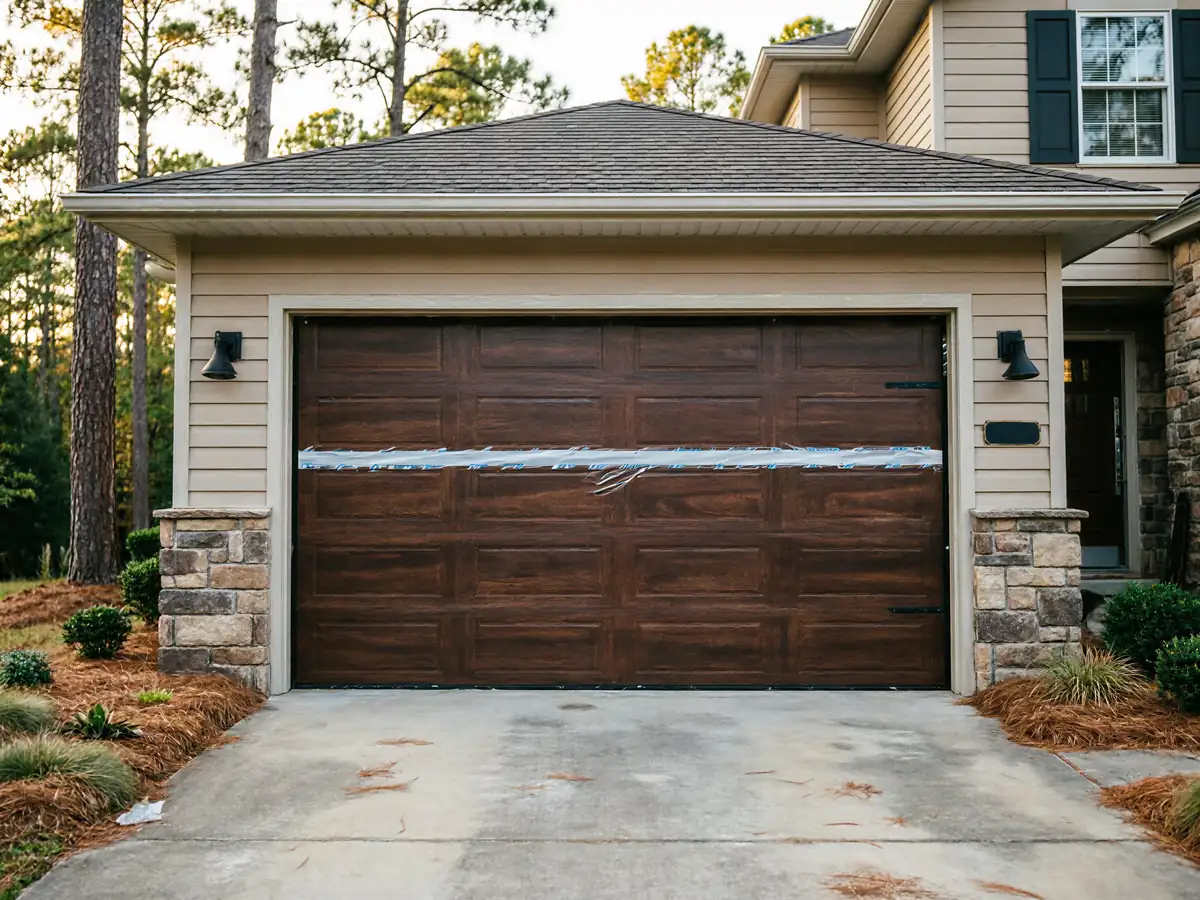
If the door is still on the track but grinding, binding, or hesitating at one spot every single cycle, that's a bracket or roller job, and it's worth calling before it becomes a dropped-panel job. If a section has already jumped the rail, stop opening and closing it with the opener. The motor doesn't know the track has failed and will keep pulling against bent hardware until something snaps, usually a cable or a stile.
We'll be straight about one thing: once track has rusted through at the mounting holes, we don't spend an hour trying to true it up and reuse it. Realigning rusted track is a short-term fix that fails again within a season, and on a house with original hardware from the 1984 median build year, that's often exactly what we find. In that case replacement track costs less over two years than repeated service calls to adjust the same failing rail.
The Situation
A door going off track in Roswell is rarely about one bad part. It's usually the combination of original-era hardware, a jamb that's moved with the house over three or four decades, and a freeze-thaw cycle that's worked a bracket loose one winter at a time. None of that shows up as a single dramatic failure. It shows up as a door that's a little harder to close than it was last year, right up until the morning it isn't.