How Local Conditions Play In
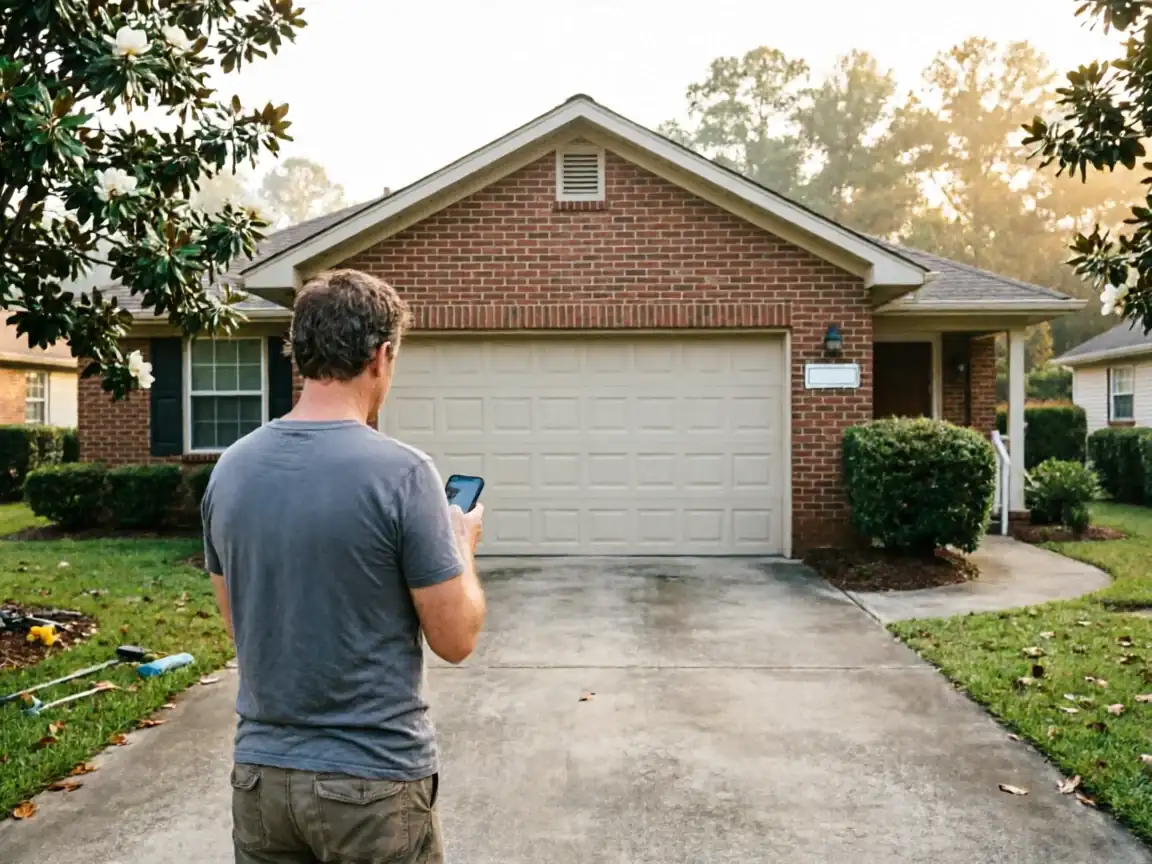
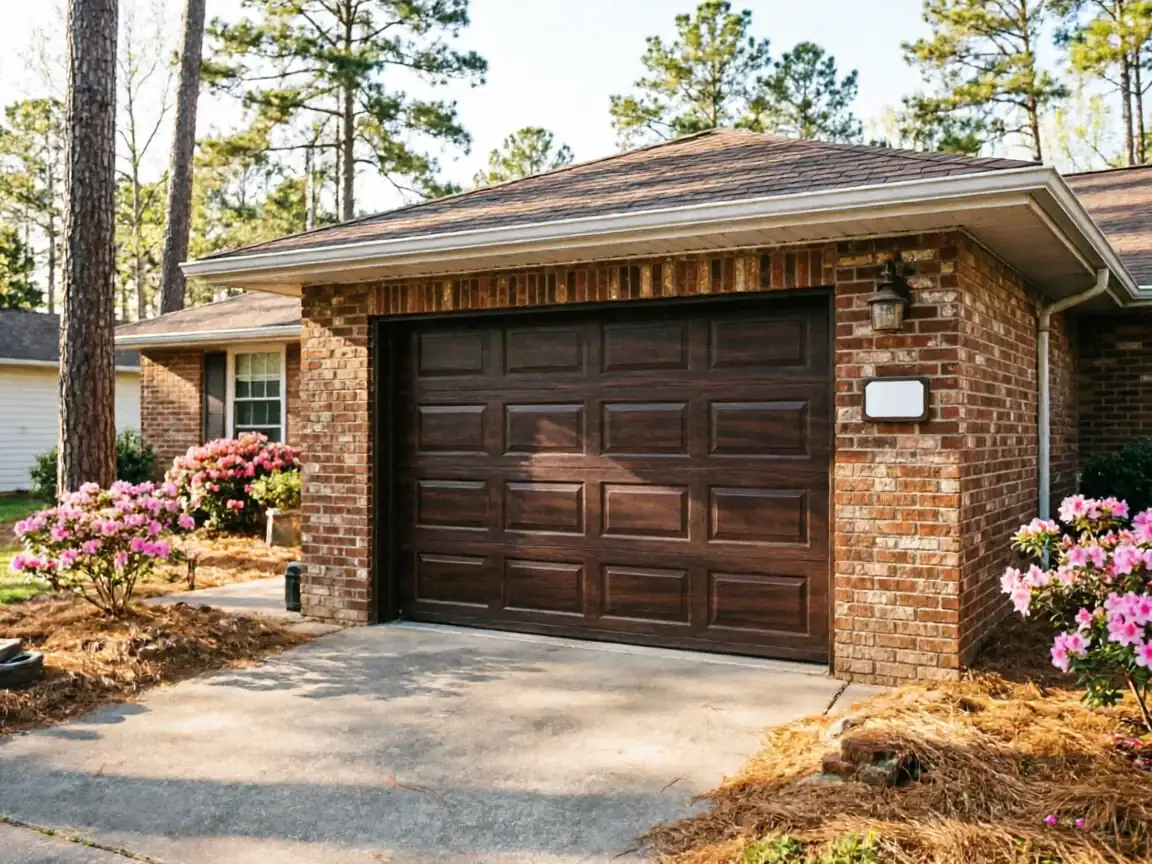
Roswell's housing stock runs 1951 to 2007, with the median build year sitting around 1984. That matters because insulation requirements for garage doors weren't standard practice on most production homes until well after that median date. A lot of the doors we open up here are the single-layer steel panel that came with the house - no foam core, no thermal break, just a sheet of metal between the garage and the weather.
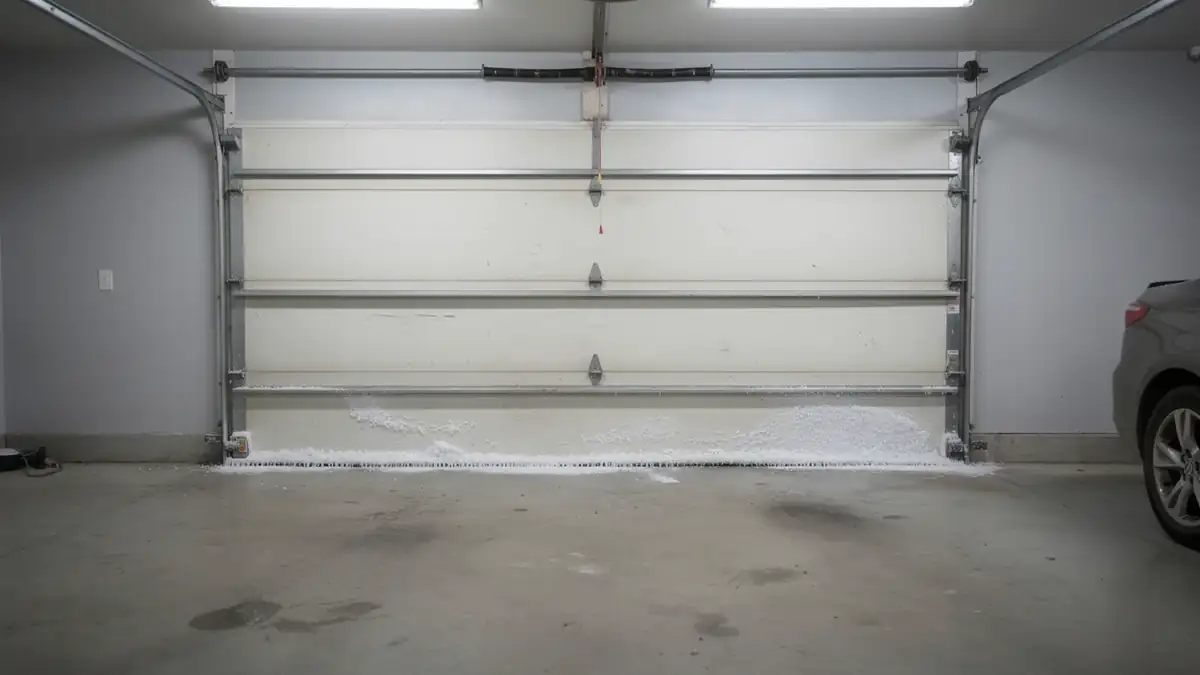
The climate band here is cold-moderate, which doesn't sound dramatic next to places that see real winter, but it's enough to matter on an uninsulated door. You get condensation on the inside face of the panel on cold mornings, and that moisture finds its way to the bottom seal, the hinges, and eventually the roller brackets. On a 1980s-era door - and across the 21 named areas we work in, that decade is the most common build era - that's usually where rust starts, not at the edges where you'd expect it.
This isn't a problem unique to one subdivision. It's a function of when the house went up, and in Roswell that's squarely in the window before insulated doors were the default.
What to Look At First
Start at the bottom panel
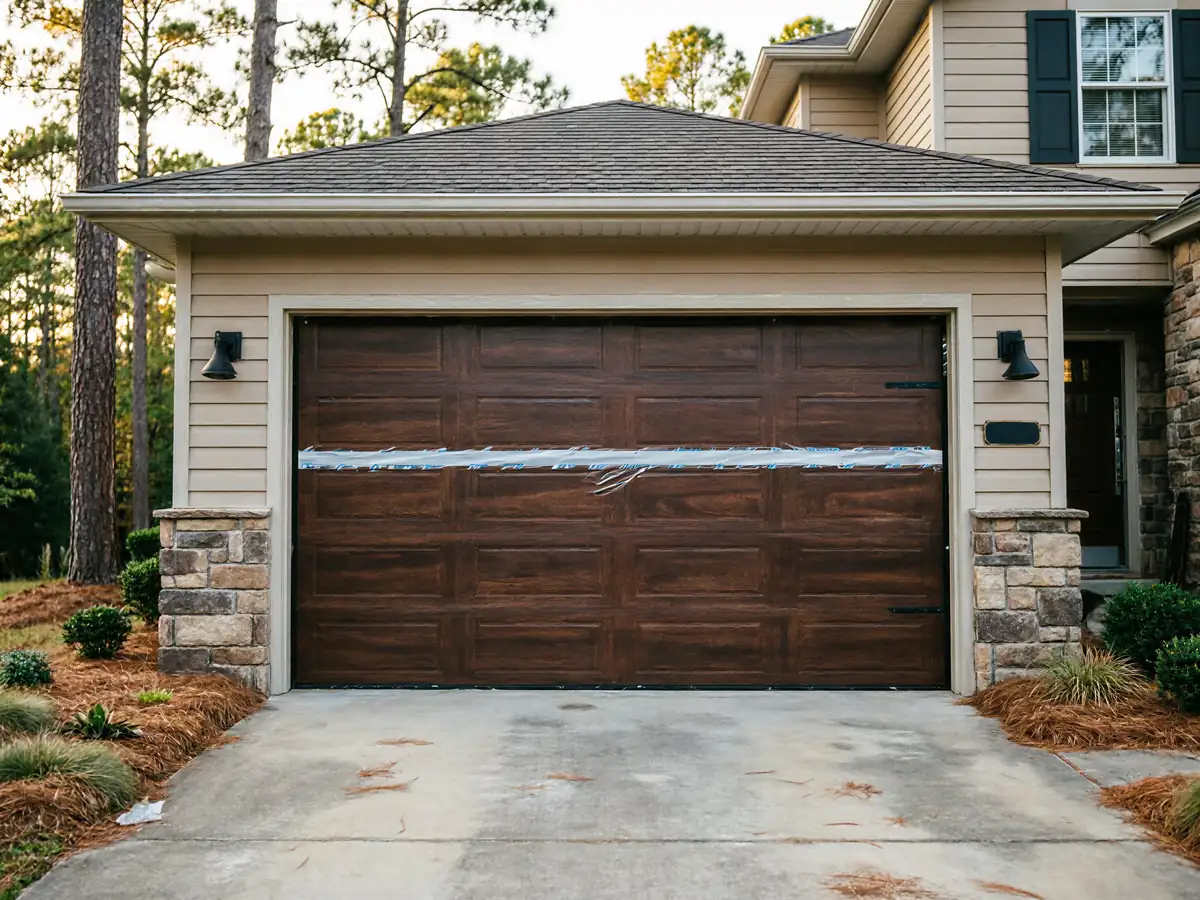
On an uninsulated steel door from the 1980s or 90s, the bottom few inches take the most moisture cycling and they're usually the first to show pinhole rust or a soft spot under the paint. Press on it. If it flexes more than the panels above it, that's your answer.
Next, check the weatherstrip at the bottom and sides
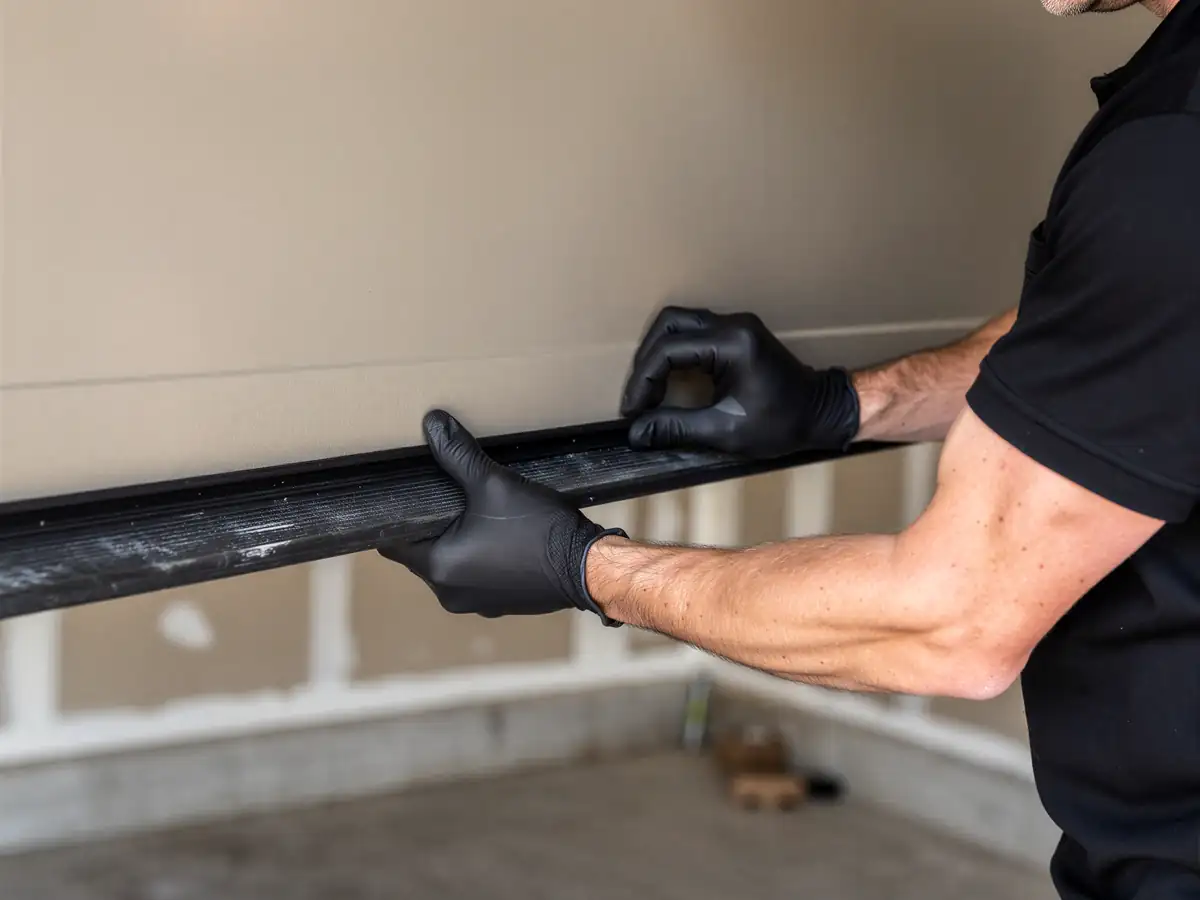
On houses built before insulated doors were common, the stripping was never designed to do much - it was a basic vinyl bead, not a compression seal. If yours has gone stiff or cracked, cold air is getting in around the whole perimeter, not just at the bottom.
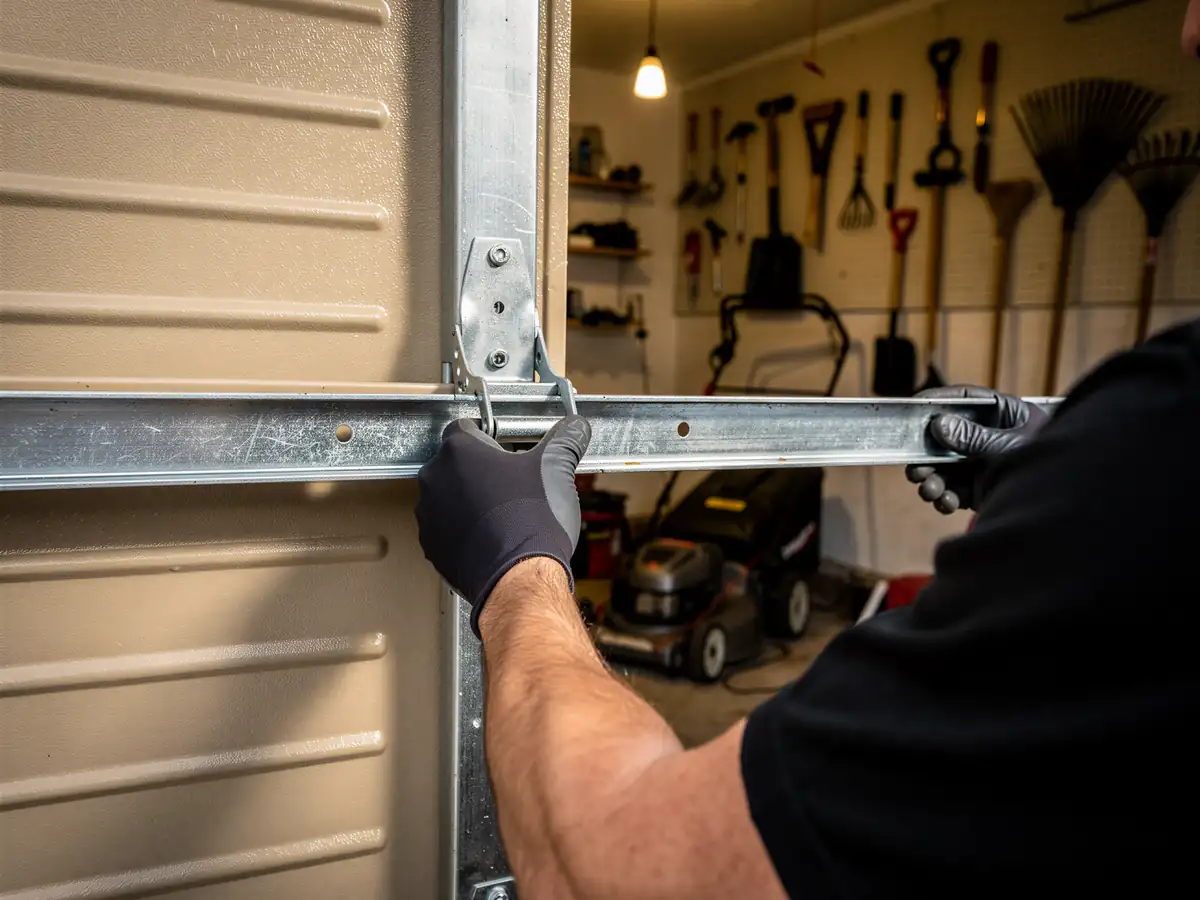
Look at the hinges and roller brackets too
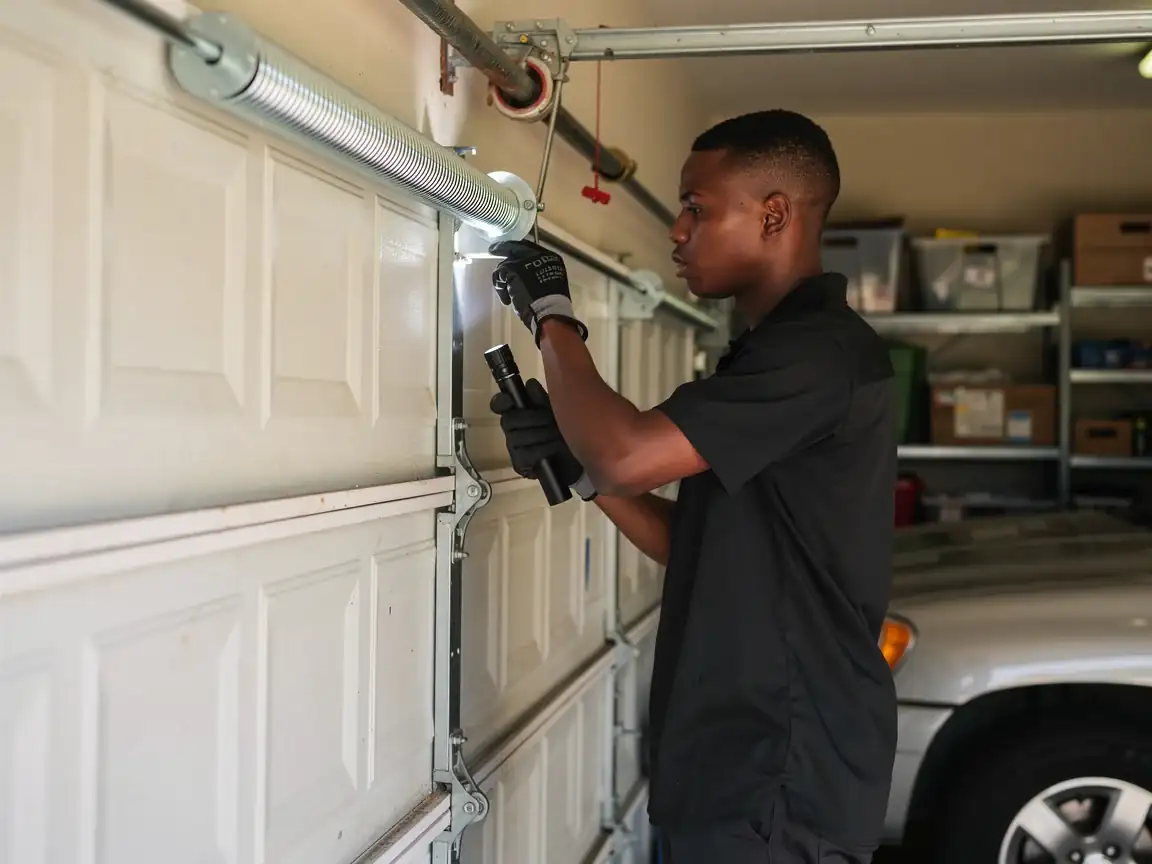
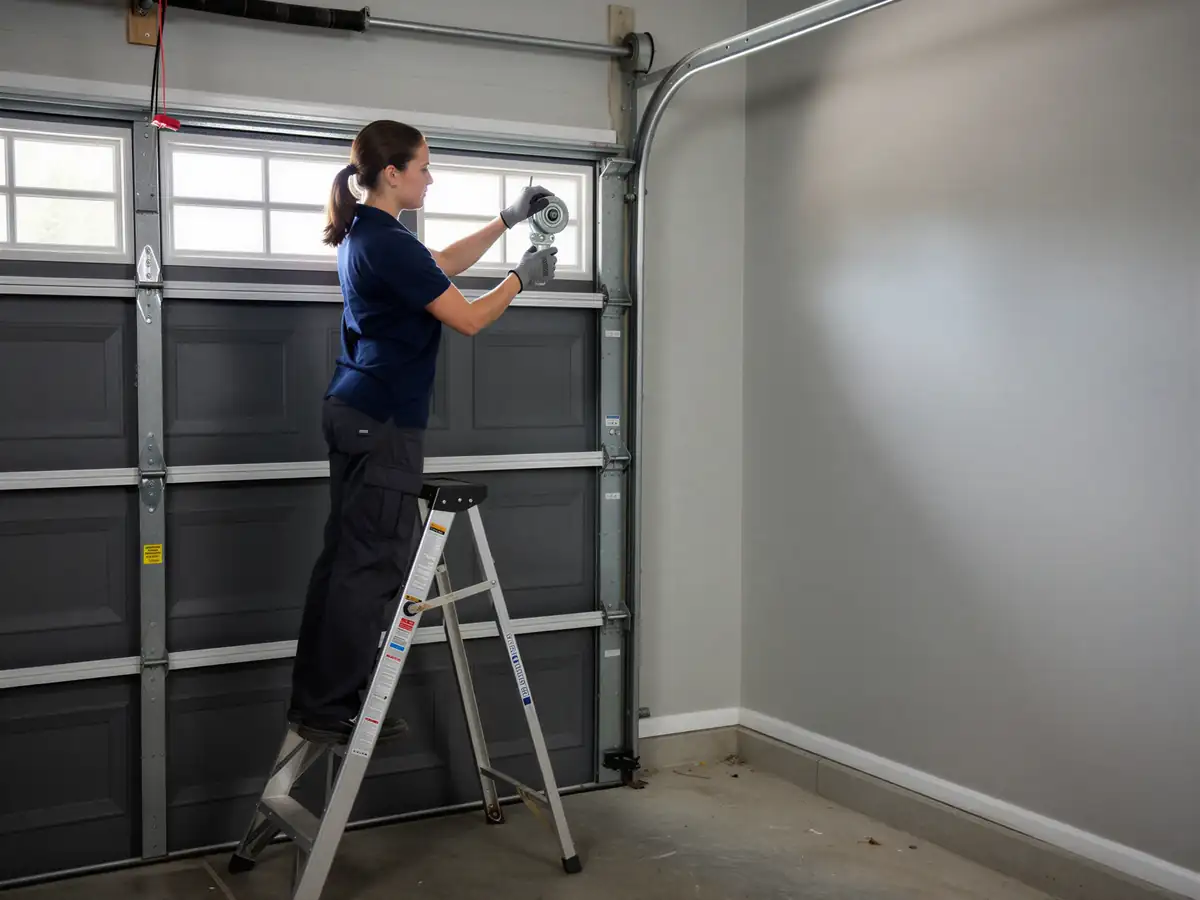
Condensation that collects on an uninsulated panel runs down and pools at the hardware. On a door this age, that's often where you'll find the first real rust, well before the panel face looks bad from the outside.
Last, open the door and put your hand flat against the inside in winter
If it feels close to outside temperature, there's no insulation layer doing anything - which is expected for a door built to the specs common across this area's 1980s-90s stock, not a sign you did something wrong.
When to Get Help
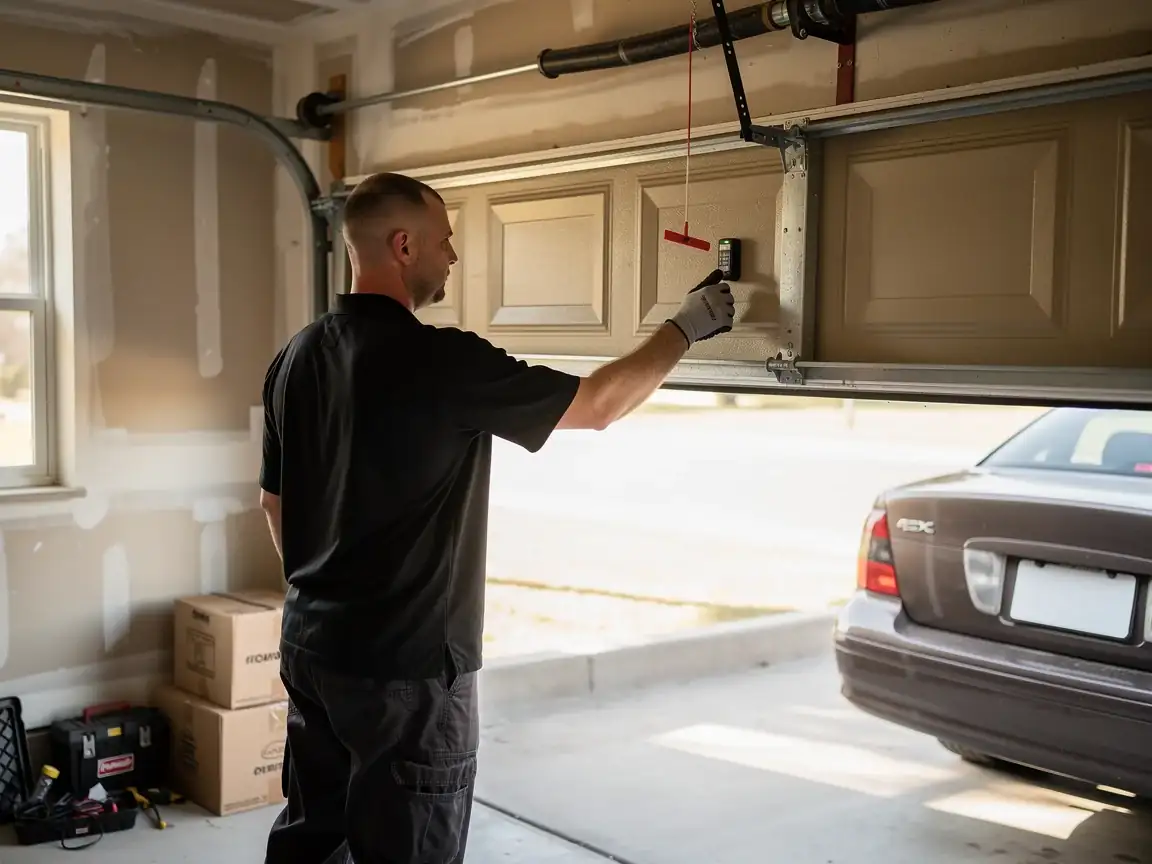
Surface rust on the bottom panel or stiff weatherstripping is something a homeowner can watch and manage for a season or two. Once rust has worked into a hinge or a roller bracket, that's a hardware job - those parts don't clean up, they get replaced.
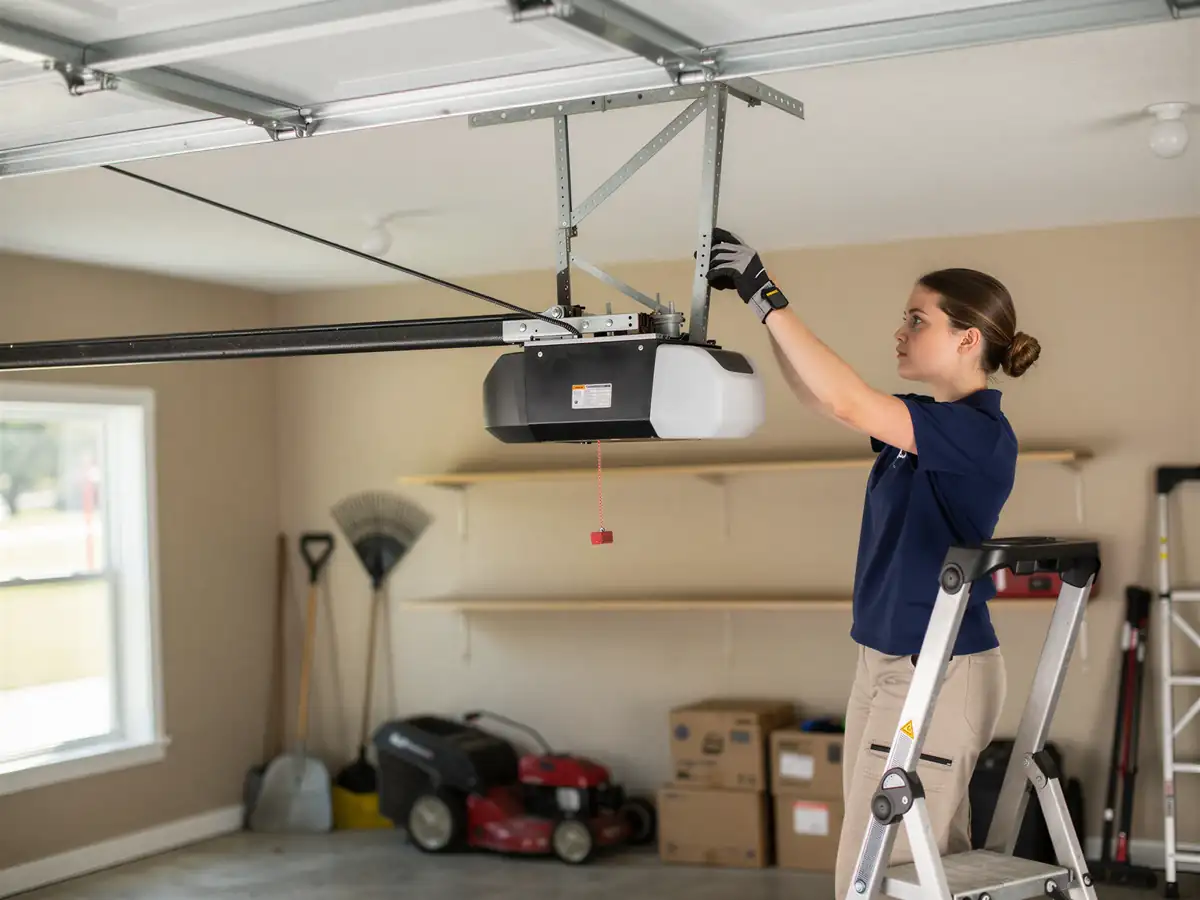
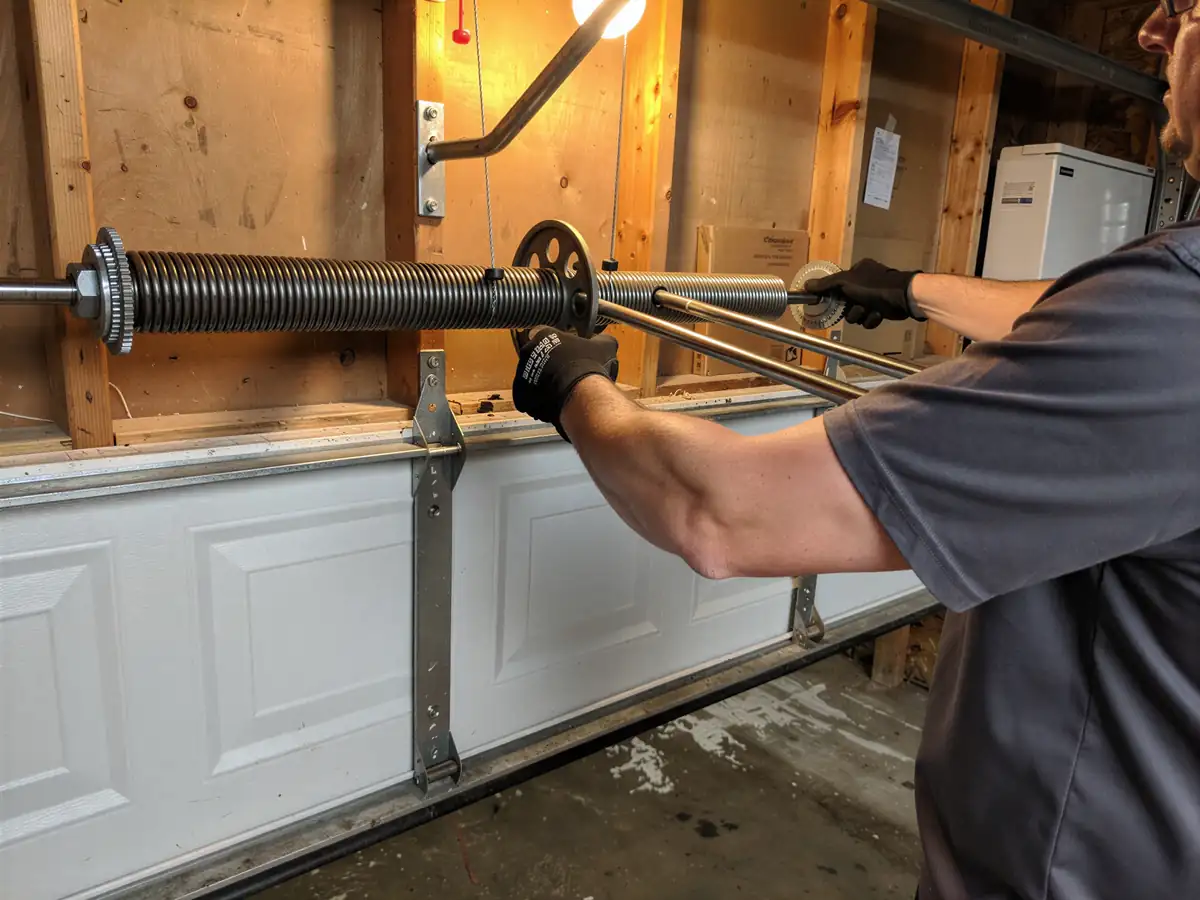
If the door is original to a house built in the 1980s or 90s, which describes a large share of homes in this area, the springs and cables are also original or close to it. Torsion springs on doors this age are near or past the end of their expected cycle count regardless of how the panel looks. A broken spring on a double door is not a DIY repair - the spring is under enough tension to cause a serious injury.
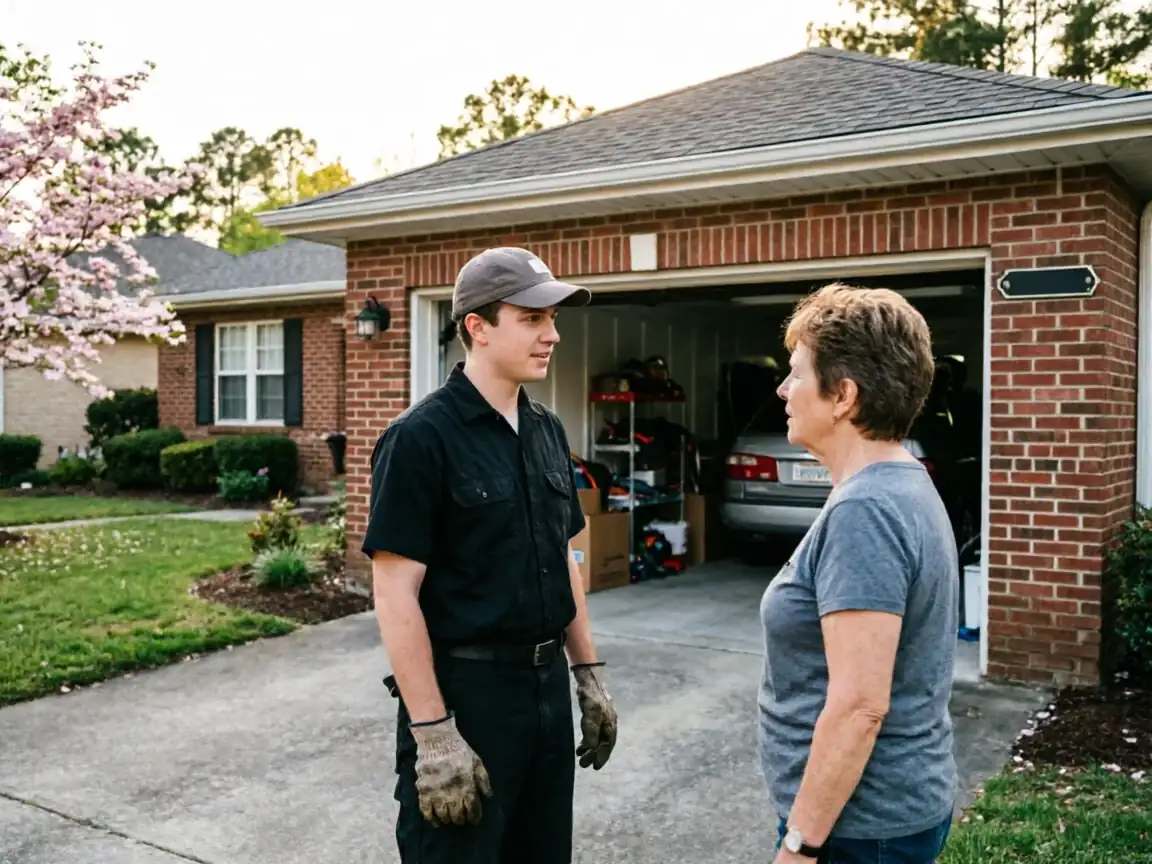
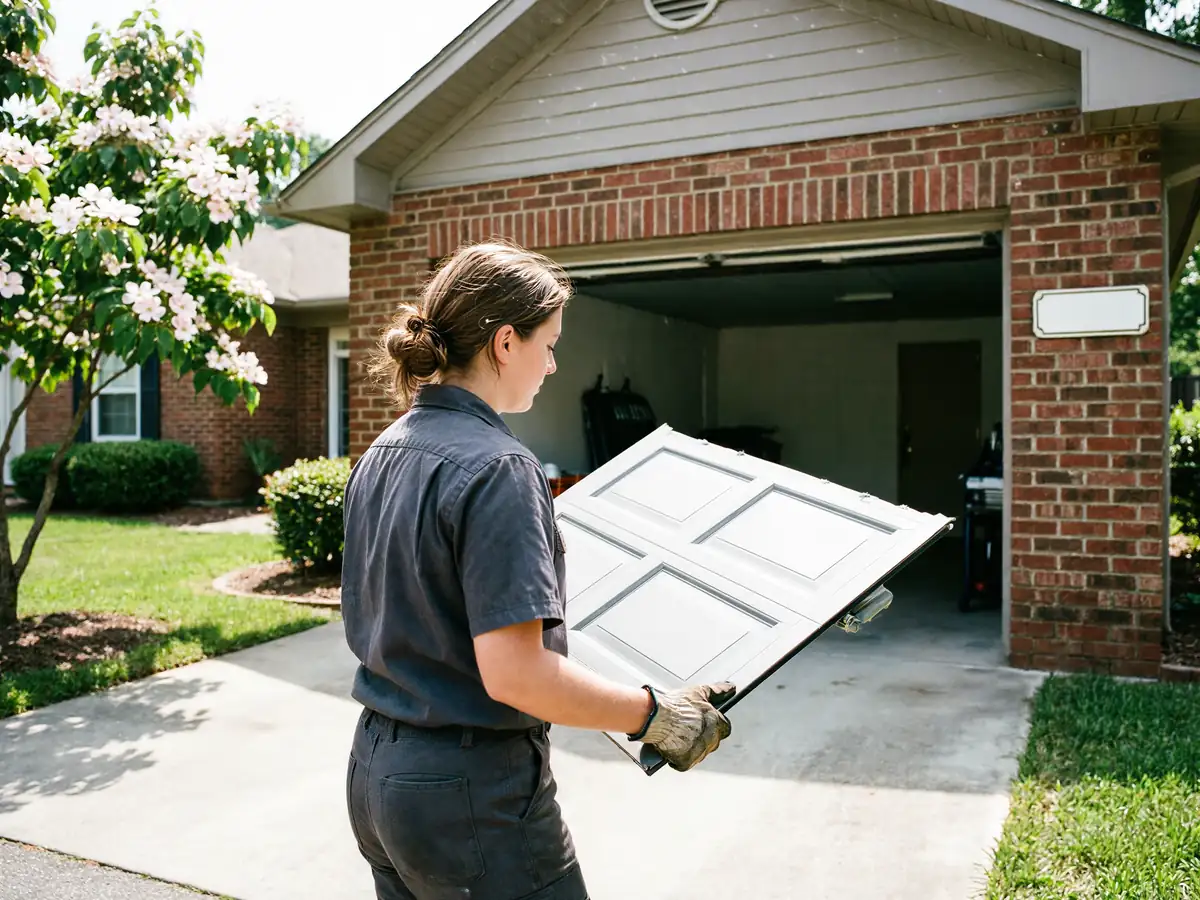
We'll tell you straight when a door is a repair and when it's a replacement. An uninsulated steel door from this era with rusted hardware and a tired panel usually costs more to patch piece by piece than to replace outright, especially once you add an insulated door's R-value into the comparison. That's not us upselling - it's the math on parts versus a new door.
The Situation
Roswell sits in a stretch of metro Atlanta where the housing predates widespread garage door insulation standards, and the cold-moderate climate band is just enough to expose that gap every winter. It's not a crisis. It's a maintenance pattern tied to when these houses were built, and it shows up the same way on most of them: panel flex, hardware rust, stiff seals.
We work across this side of the metro, from areas near Mountain Park out toward Peachtree Corners and Berkeley Lake, and the pattern holds pretty consistently because the build eras are similar. What we can't tell you without seeing the door is how far along the rust or spring wear is on your specific garage - that's a look-and-tell, not a guess-from-the-street.
If your door still has its original panel and hardware from the 80s or 90s, it's worth a walk-around before next winter rather than after a cold snap finds the weak spot for you.