What It Costs
We don't quote a number without looking at the door, and anyone who does over the phone is guessing. What drives the bill here is age of the hardware, not the brand of door. A lot of houses in this area went up between 1951 and 2007, with the median landing around 1984, which means a good chunk of the torsion springs, rollers, and cable drums out there are original equipment nobody makes anymore. Swapping a single roller on a newer setup is a quick job. Replacing a whole torsion shaft because the bearing plates have seized is a different job entirely, and it costs more because of the extra parts and labor, not because we padded the invoice.
Median household income in the service area sits at $91,308, and what we see in practice is that owners in that range tend to ask for the full fix once, rather than patch the same spring twice in a year. That's a reasonable call on an 80s or 90s door - at some point the hardware itself is the problem, not any one part on it. We'll tell you straight when a repair isn't worth doing.
Can You Do This Yourself
Some of it, yes
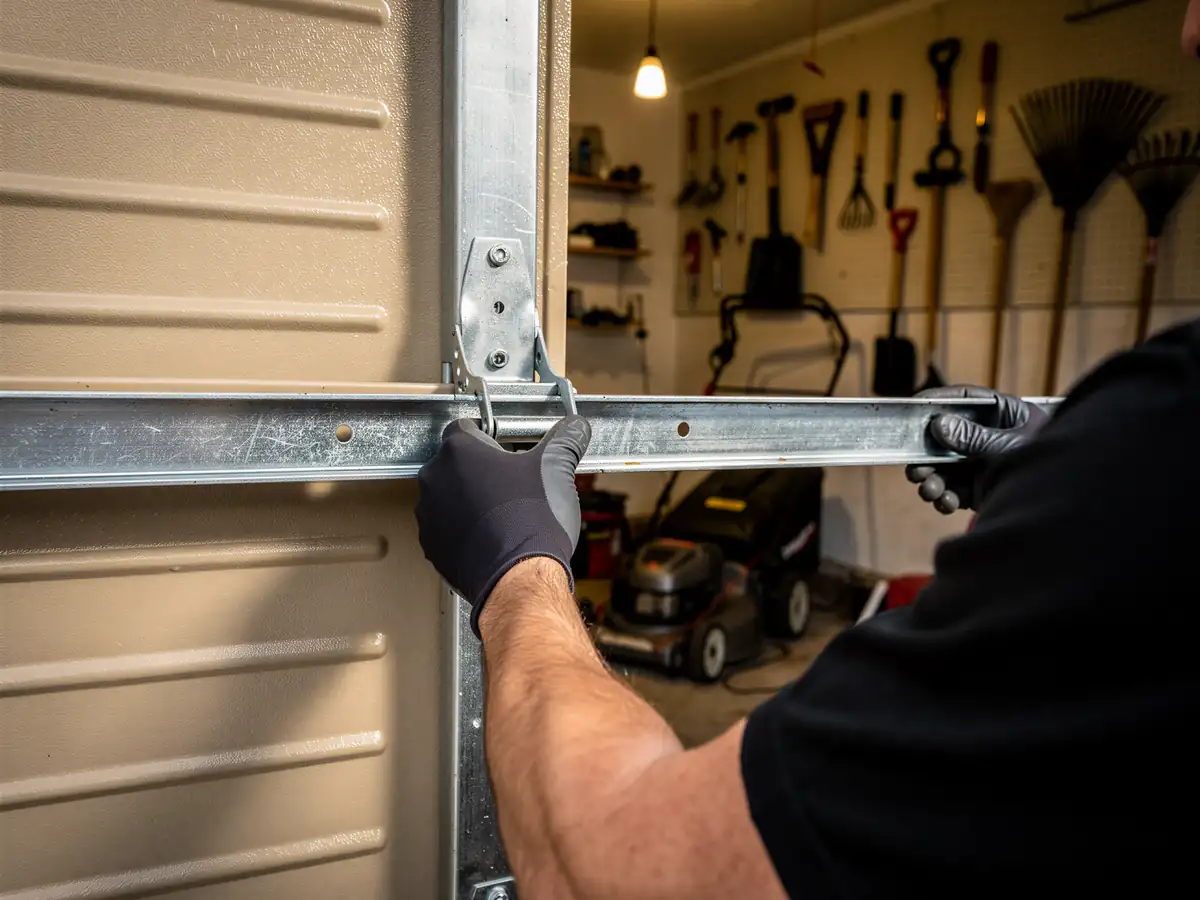
Spraying the rollers and hinges with a proper garage door lubricant twice a year, checking that the track bolts haven't backed out, and testing the auto-reverse by setting a 2x4 under the door are all things an owner can do on a Saturday morning. None of it requires taking anything apart.
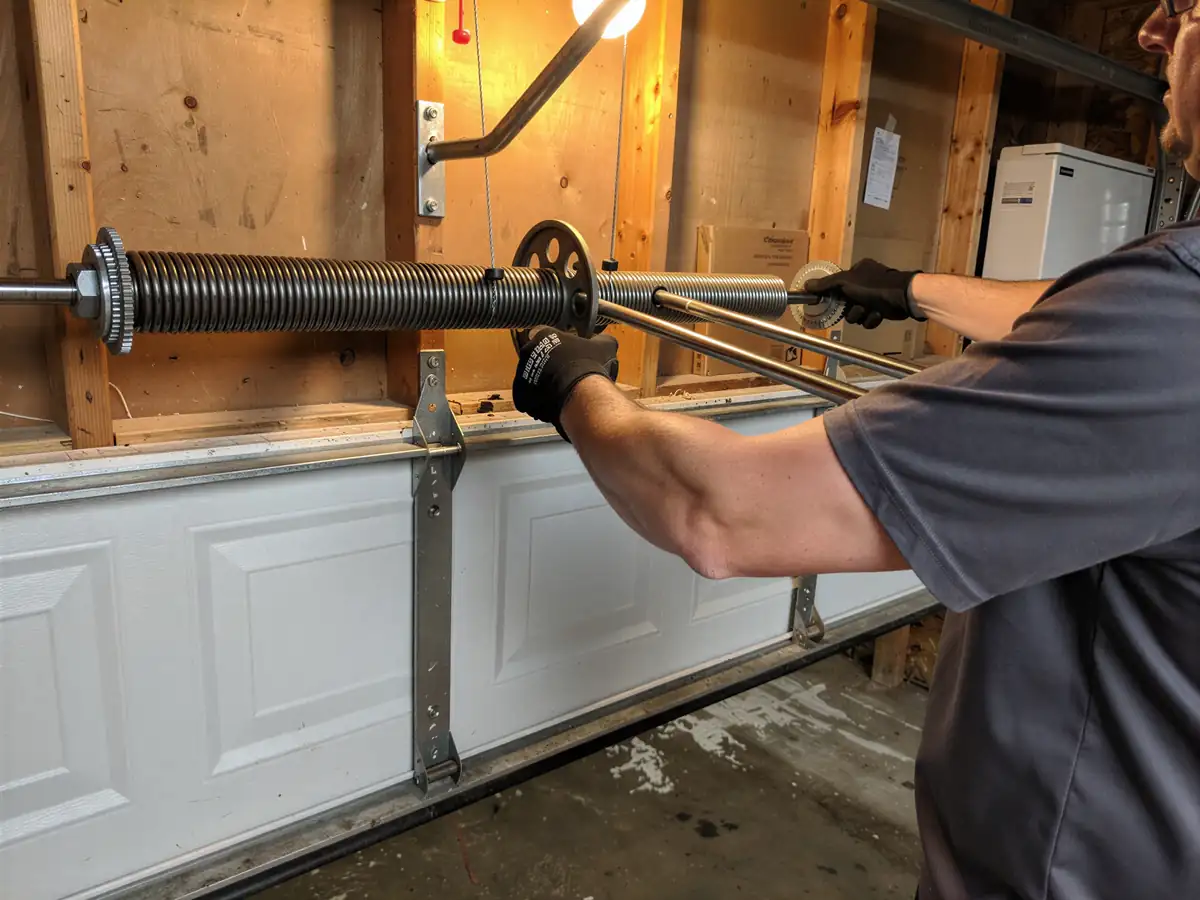
What you shouldn't touch is the torsion spring system
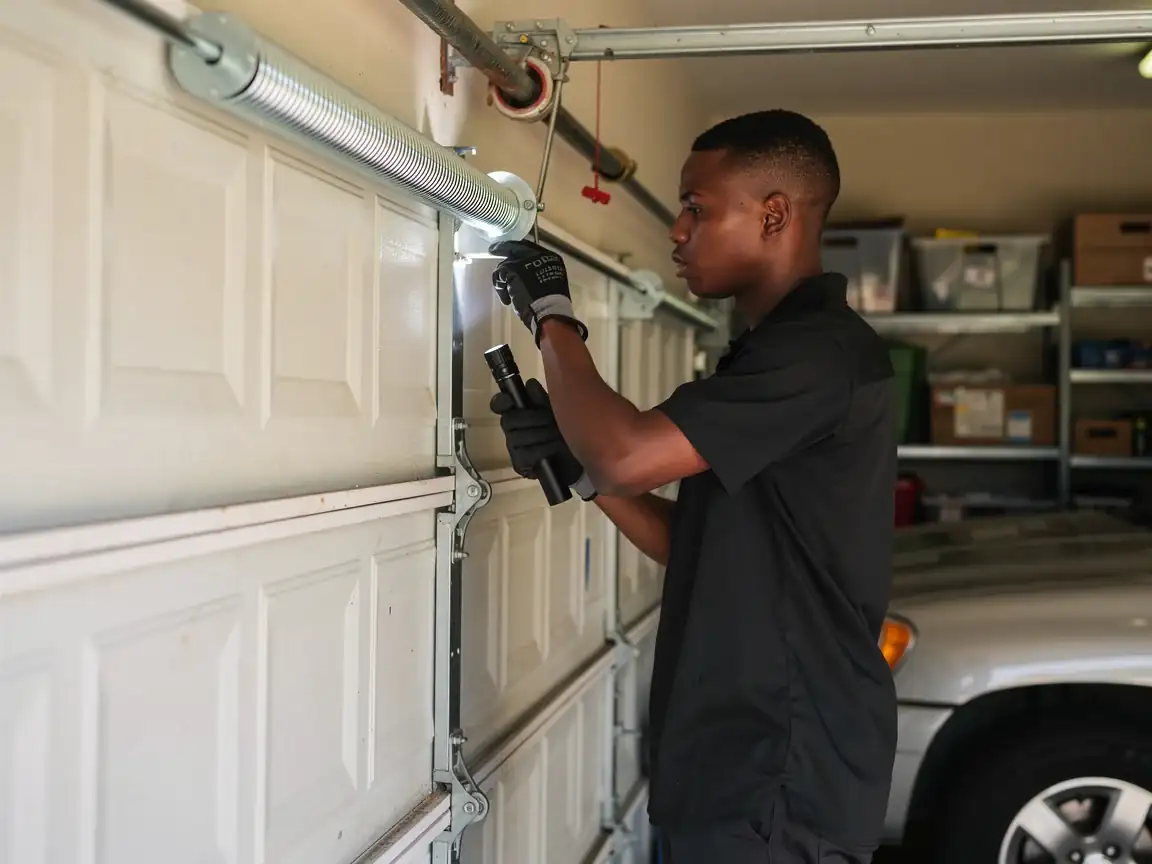
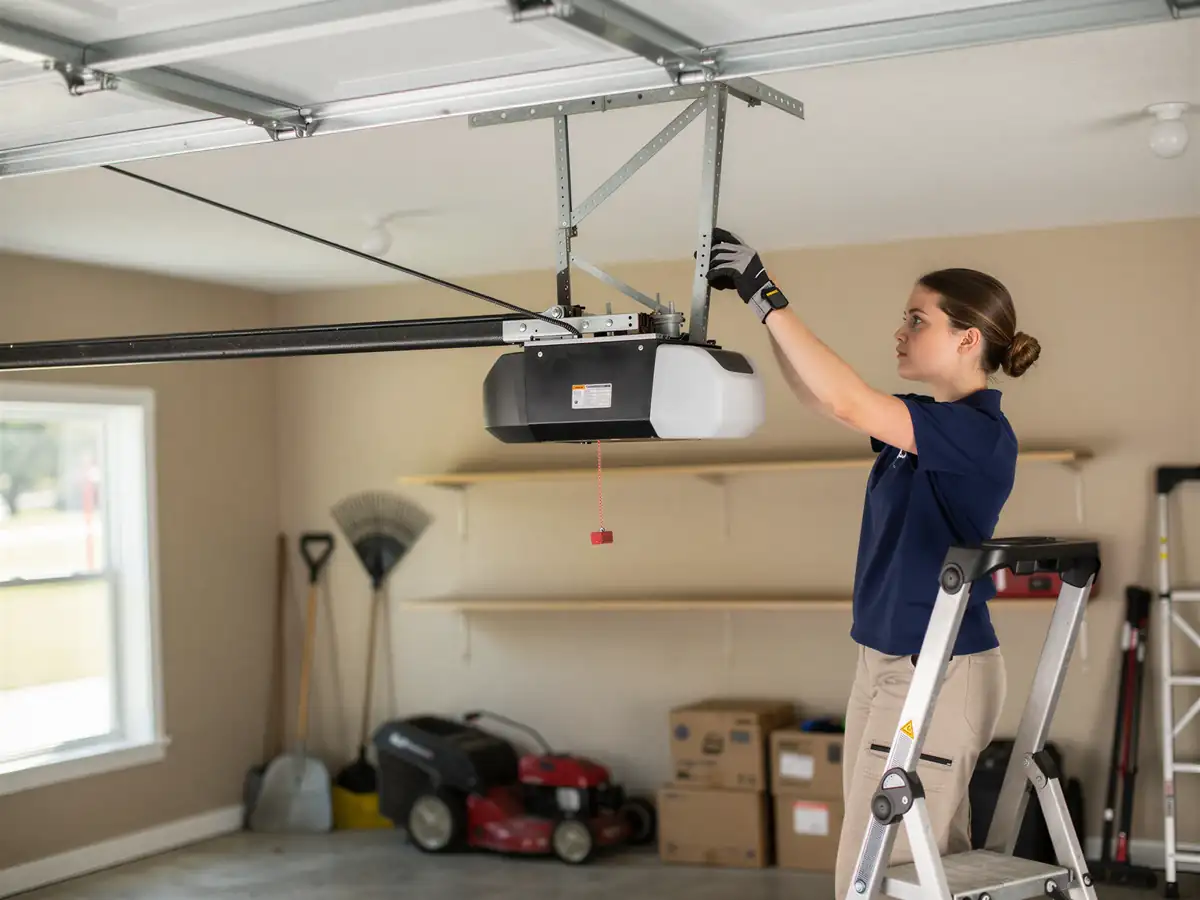
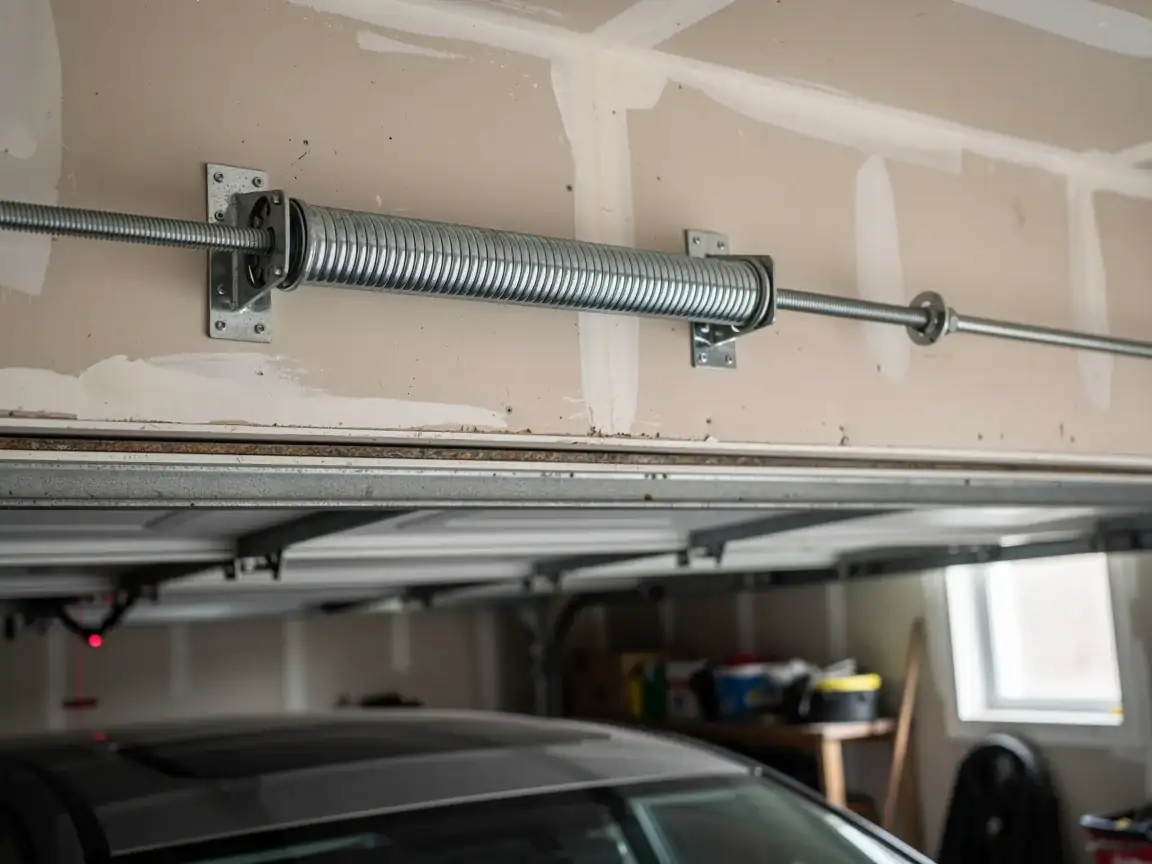
It's wound under enough tension to break a bone if it lets go wrong, and on the older torsion setups common in this area's 1980s and 90s housing stock, the winding cones are often rusted or undersized compared to what's sold today. Cable adjustment and opener logic board work fall in the same category - not because they're complicated to explain, but because getting them wrong either hurts you or wrecks the door. If a job involves anything under spring tension or inside the opener housing, that's a call, not a weekend project.
How It Shows Up
The most common complaint we hear is a door that struggles on cold mornings and loosens up once the garage warms a bit - that's usually old grease gone stiff in a torsion spring that's already lost some of its coil tension. Given how much of the housing stock here is 1980s and 90s vintage, that spring has had three or four decades to fatigue, even if it's never visibly broken.
Other signs: a grinding or popping sound from the rollers as the door travels, which on original hardware usually means steel rollers wearing their track groove unevenly rather than a simple lubrication fix. An opener that runs but the door barely moves points to the spring doing none of the lifting anymore, leaving the motor to carry weight it was never built to carry. None of these show up overnight - they build for months before the door finally won't open at all, usually on the coldest morning of the stretch.
What Causes It Around Here
Two things compound each other in this area: the age of the hardware and the climate band. With most garage door systems in the 1980s and 90s range, and a good share of houses going back as far as 1951, the torsion springs out there are well past the cycle count they were rated for when new. Steel fatigues whether or not a door ever shows a problem, and cold, moderate winters here add freeze-thaw stress on top of that fatigue - the spring steel contracts, grease thickens, and the one extra pound of resistance is enough to snap a spring that was already near the end of its life.
Across the broader service area, with 139,077 households and roughly 47,174 owner-occupied houses, a large share of them sit in that same build window, which is why the torsion-spring failure we see most isn't random - it's a predictable outcome of a 1980s-90s door built for a milder duty cycle than it's now being asked to handle, combined with winters that are harder on old steel than owners expect.