How Local Conditions Play In
Roswell sits in a cold-moderate climate band, which means your door hardware deals with real swings - cold, damp mornings followed by humid afternoons, especially near wooded lots close to the creek-cut neighborhoods closer to Mountain Park. That swing matters more than people think. Steel track and spring coil expand and contract with temperature and moisture, and the grease that was fine in August turns gummy by January. In a service area where housing was built between 1951 and 2007, with most of it going up through the 1980s and 90s, you've got a wide mix of door ages and galvanizing quality living on the same streets. A door built on 1980s hardware wasn't speced for the same cycle count modern torsion systems handle, and that shows up as noise years before it shows up as failure. If your door only squeals on the first cold run of the day and quiets down by the second or third cycle, that's thermal stiffness in old grease, not a structural problem - yet.
Humidity does a second job here: it rusts cable strand and pits roller bearings faster than a dry climate would. A noise that sounds like metal-on-metal grinding, as opposed to a dull rhythmic thump, is more likely surface rust on a roller than a bent track in this area.
What to Look At First
Start at the rollers
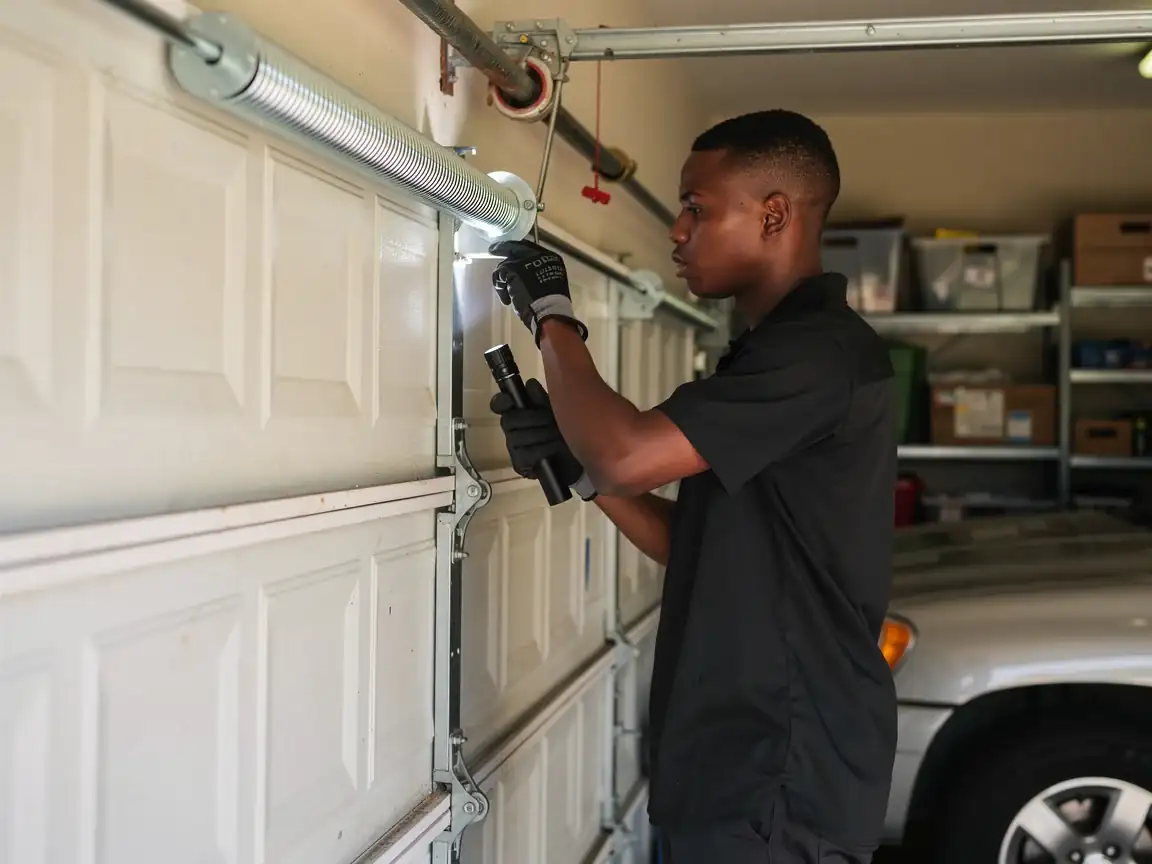
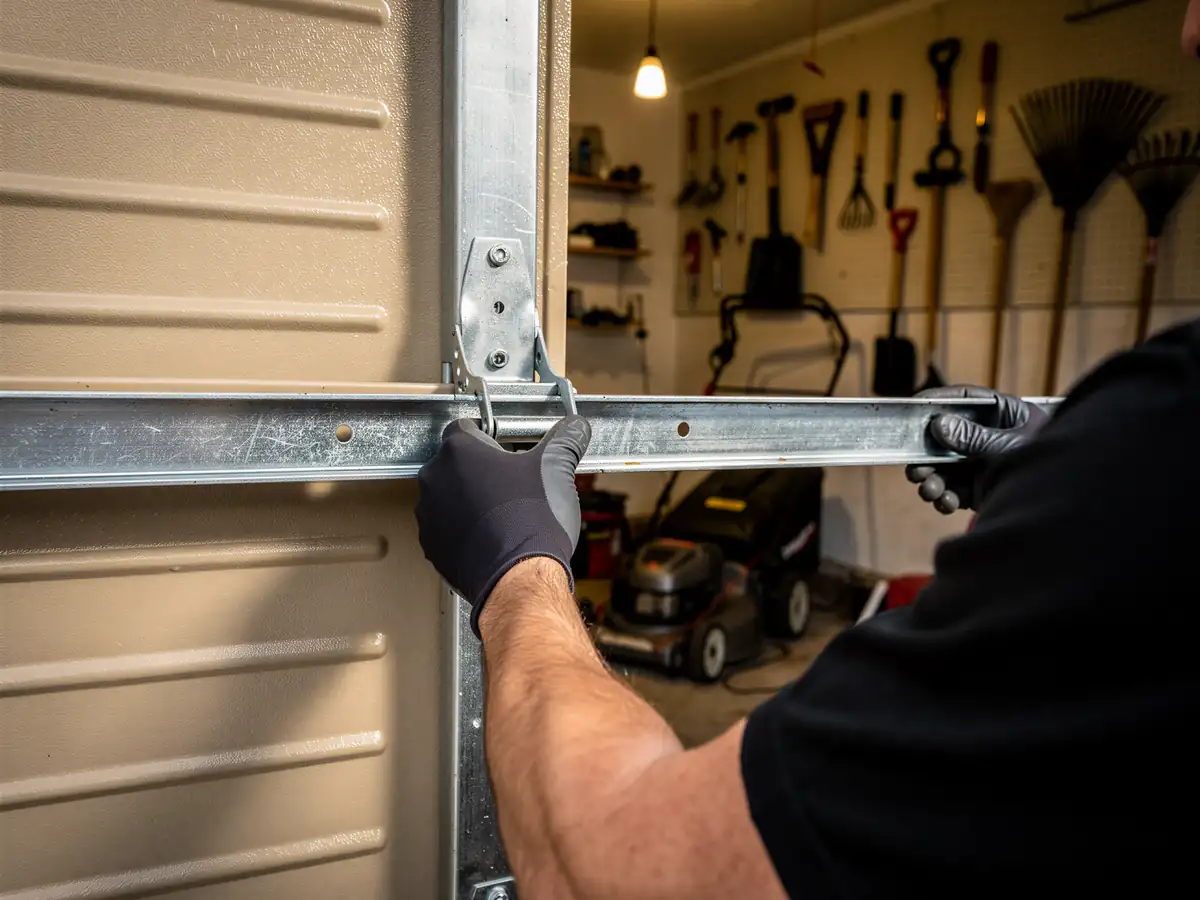
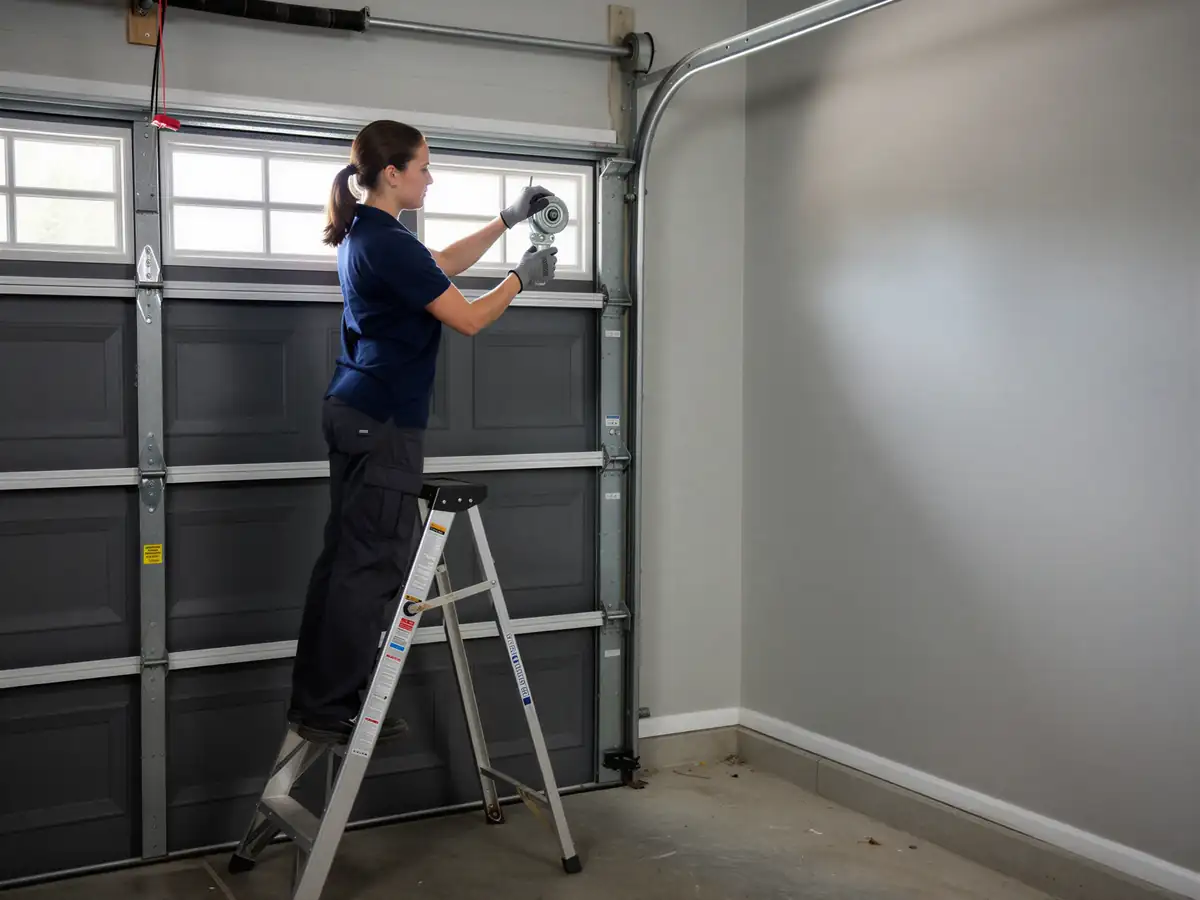
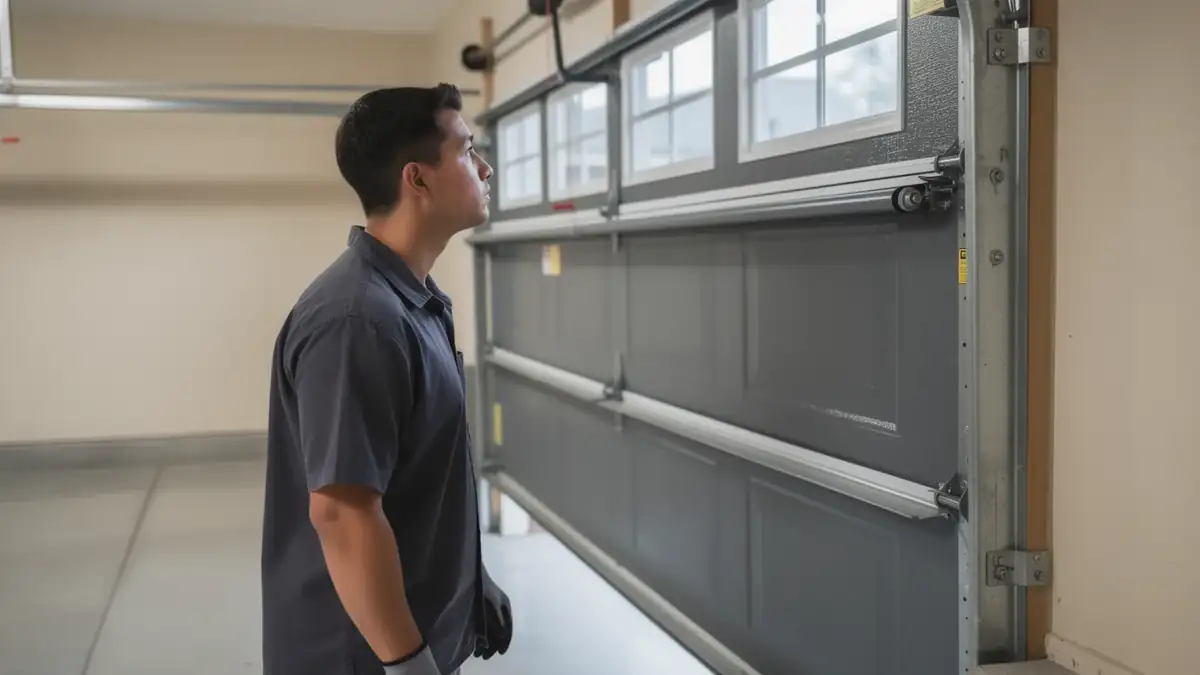
Because most of the housing stock in this area - built mostly in the 1980s and 90s across the named neighborhoods we work - is old enough that original rollers have outlived their rated cycle life. A dry squeal on every cycle, not just the cold first run, usually means a roller bearing has gone dry or cracked. Look at the roller itself where it meets the track; a flat spot or visible rust ring tells you it's near the end.
Next check the hinges between panels
On doors from the 1984-ish median build year for this area, steel hinges have had decades of flex cycles, and a popping sound as the door passes the midpoint is often a hinge pin working loose in its hole, not the spring.
Last, the opener's drive mechanism
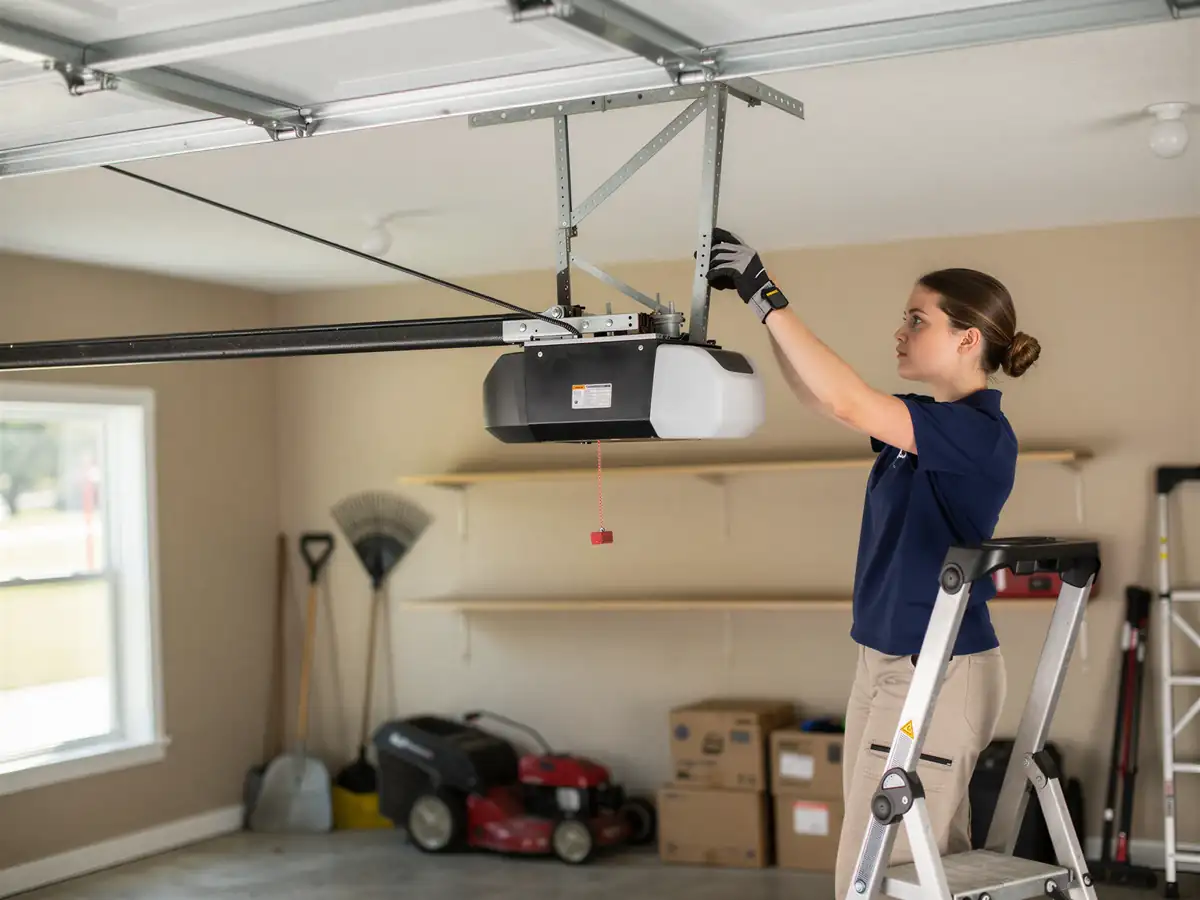
Chain-drive units slap against the rail when the chain stretches, which happens gradually and is louder in cold weather when the metal rail contracts slightly. A rhythmic clack-clack-clack timed to the door's travel, not a one-time bang, points there.
What you're listening for is pattern
Constant on every cycle (hardware wear), only in cold weather (grease/metal contraction), or only once and then gone (something briefly caught, worth a second look but not an emergency).
When to Get Help
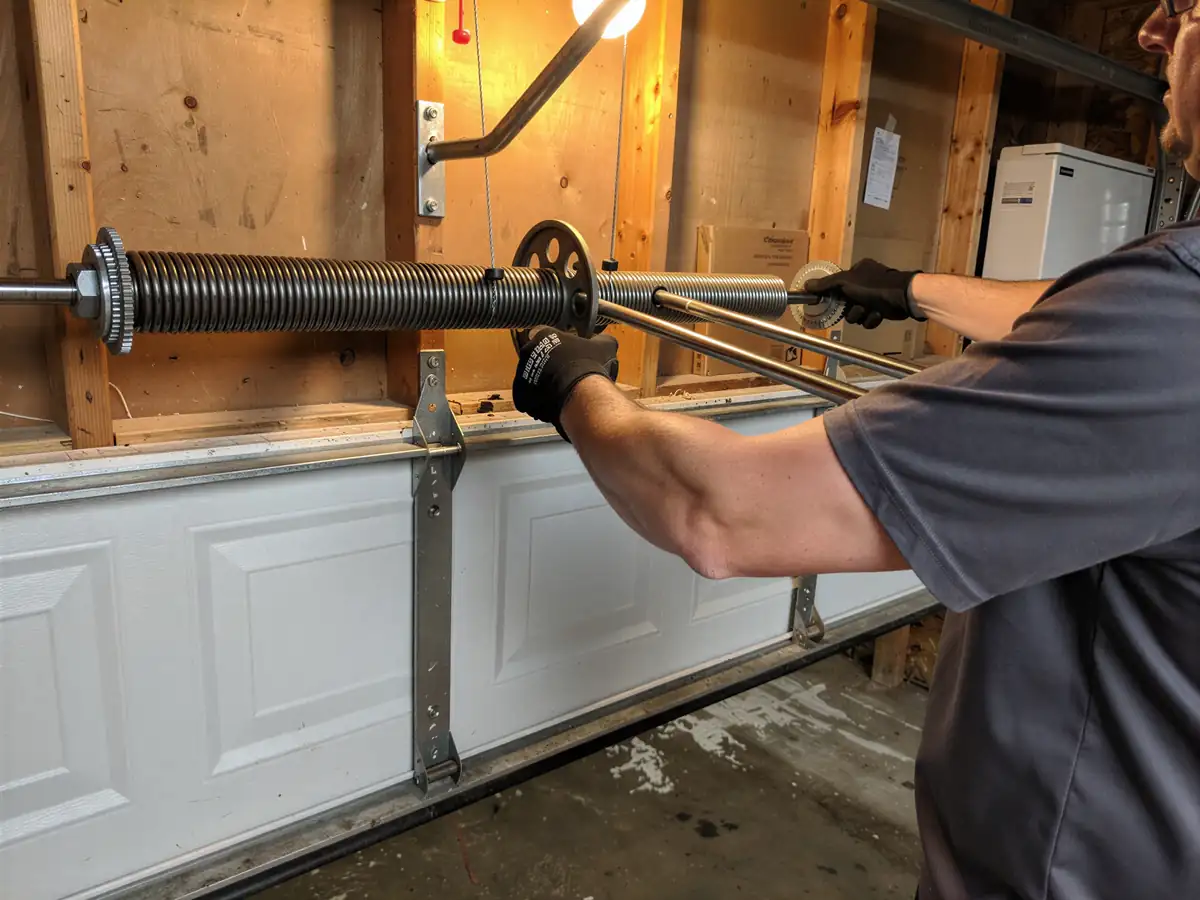
A loud bang followed by the door refusing to move, or moving unevenly on one side, means a torsion spring has let go or a cable has jumped its drum. That's not a noise to diagnose further - a wound spring under tension is dangerous to touch, and this is one of the few garage door jobs where we'd tell you flatly not to try it yourself. Call before you open the door again.
A grinding noise that gets louder week over week, especially paired with the door feeling heavier to lift by hand, usually means a roller or bearing is close to failing outright. You can usually still get a week or two of normal use, but it's worth scheduling before it strands the door mid-track.
What doesn't need a same-week call: an occasional squeak on the first cold-morning cycle that quiets after a couple of runs, or a faint hum from the opener motor that's been there since it was installed. Those are candidates for a lube job and a look at your next regular visit, not an emergency.
The Situation
Across the households we see in this part of Georgia - roughly 47,000 owner-occupied houses in a service area of about 139,000 households - the garage door is original or first-replacement equipment on a lot of properties, simply because the housing here was mostly built before cheap, modern torsion systems were standard. That means a meaningful share of the doors we look at are running hardware that's older than the roof above them.
We won't tell you every noise means a new door. Plenty of what we hear on a service call is a $20 roller swap or a grease job, and we say so. Where replacement actually makes sense is when the door itself - panels, not just hardware - has warped or rusted through, which does happen on houses from the earlier end of this area's build range. If you're not sure which category your noise falls into, that's a reasonable thing to ask about before anything gets scheduled.