Getting It Booked In
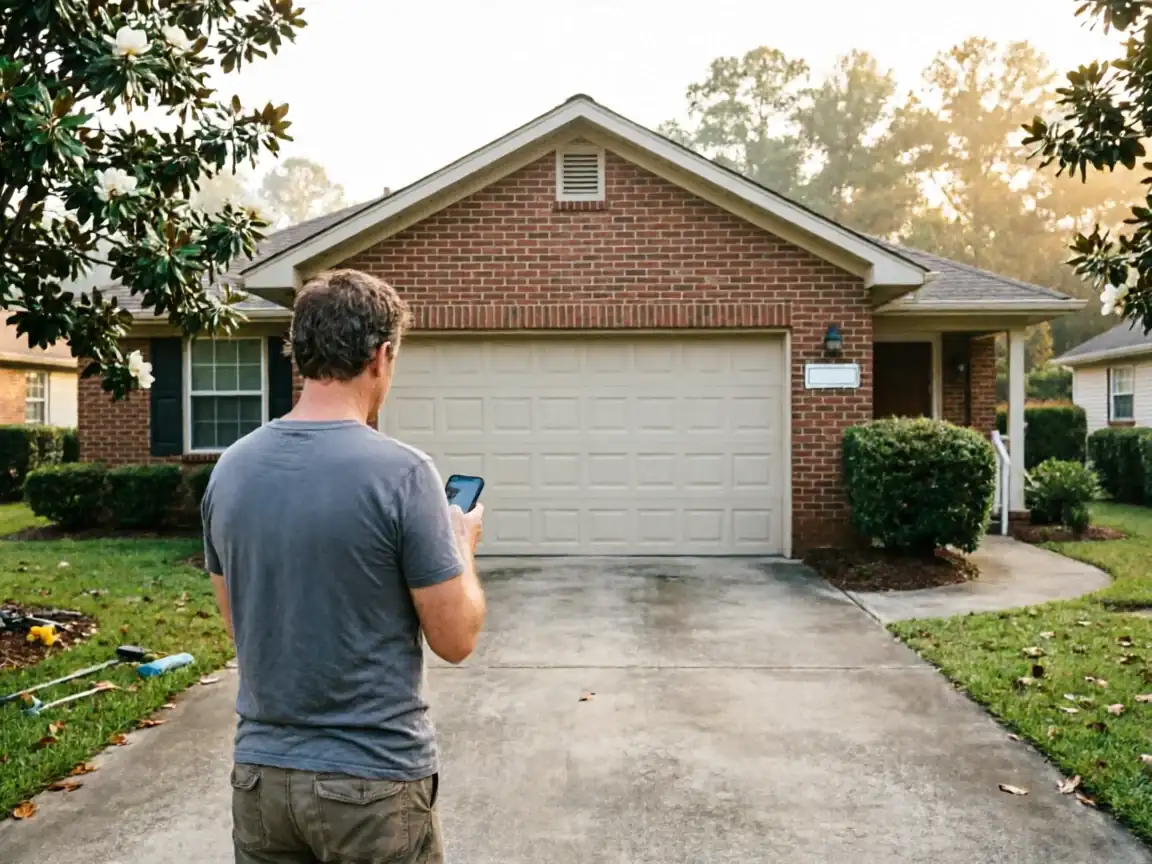
When you call about a door in Druid Hills, we ask what year the house went up before we ask what the door is doing. That matters here because Druid Hills homes went up mostly around 1964, well before the 1980s-and-90s wave that built out most of the rest of our coverage area. A door from that era carries different springs, different track, sometimes a different drive altogether, and we'd rather know that before the truck leaves Roswell than figure it out standing in your driveway.
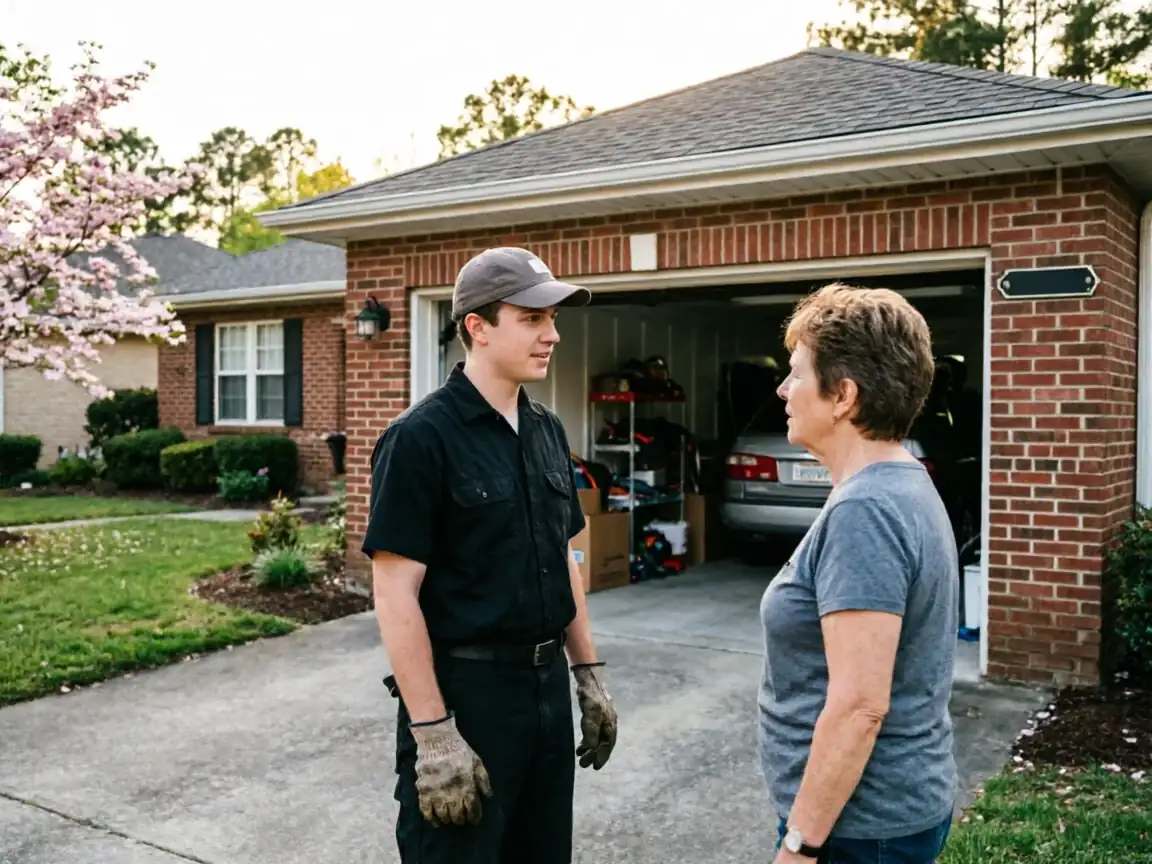
We're coming from Roswell - it's an 18-mile haul from our shop, so we build the trip into one visit rather than two. That means we ask more up front: what the door sounds like, whether it's sticking on one side or both, whether the opener light blinks a code. The more you can tell us on the phone, the better loaded the truck is when it shows up. With roughly 3,579 households in Druid Hills, this isn't a neighborhood we're rolling through every day, so a well-stocked first trip beats a callback.
How We Fix It
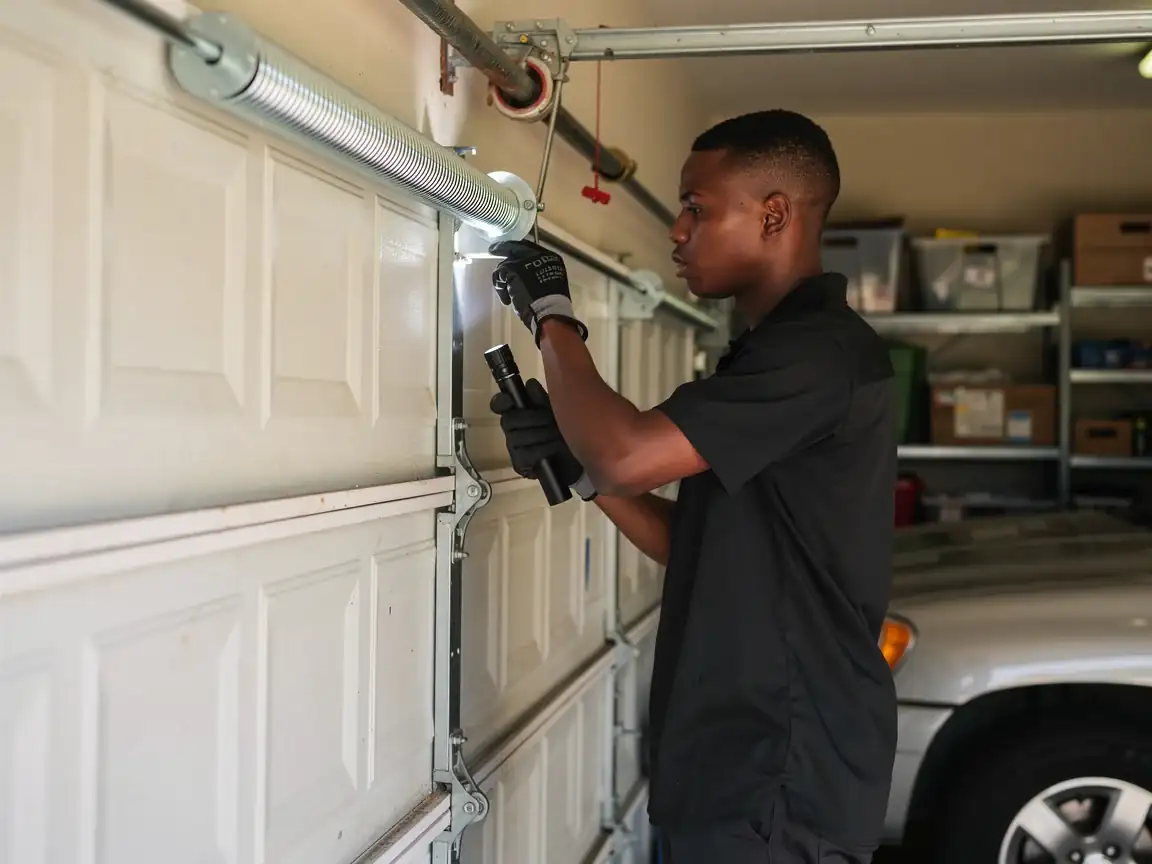
On a house built around 1964, the first thing we check is the spring setup
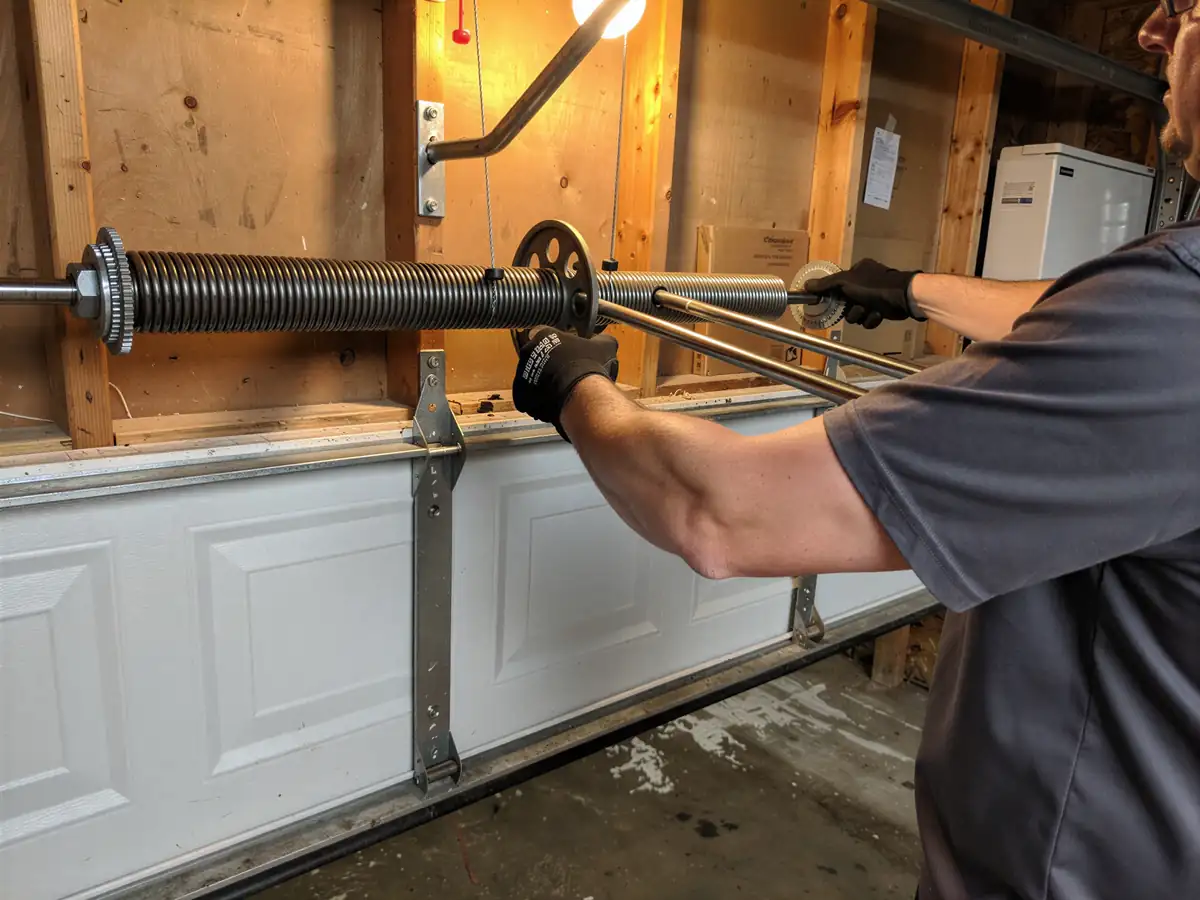
A lot of doors from that period run extension springs along the horizontal track rather than torsion springs over the header, and the two don't repair the same way - different cable routing, different safety containment, different parts. We diagnose which one you've got before we quote anything.
After the springs, we look at the track and rollers
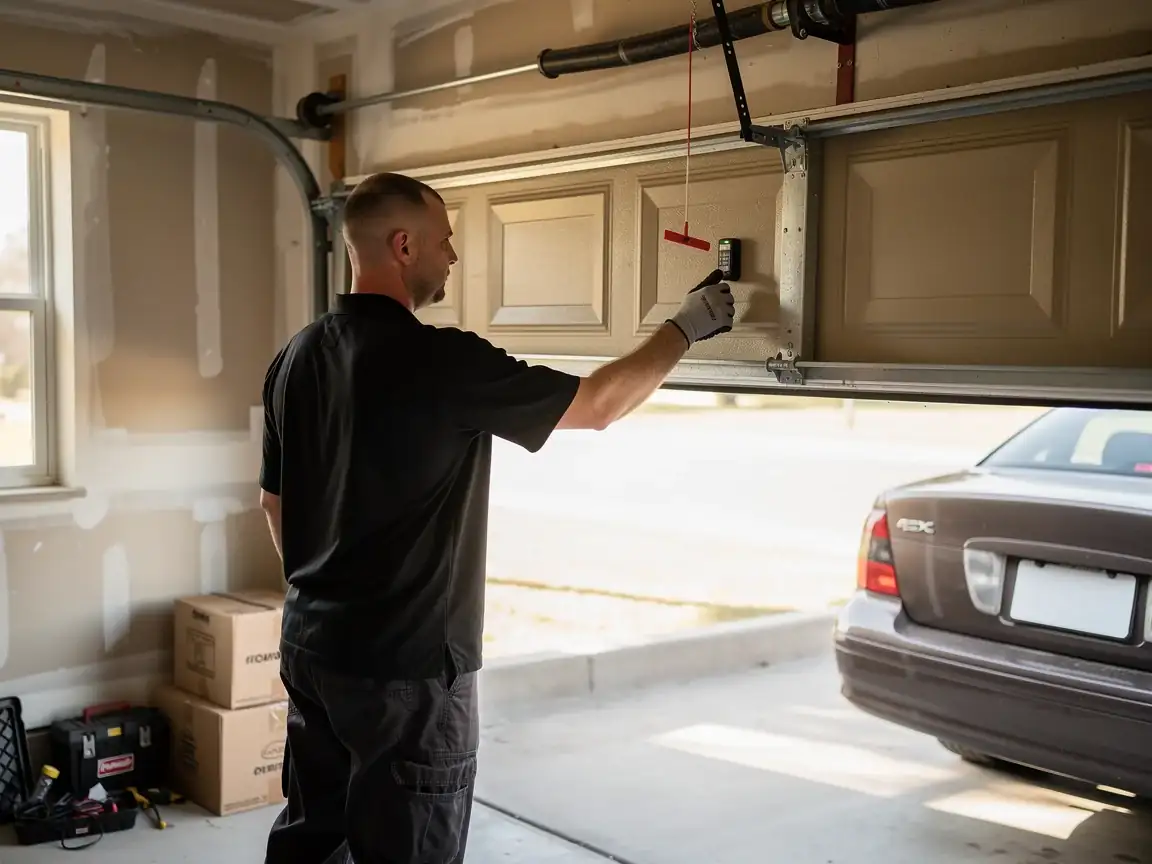
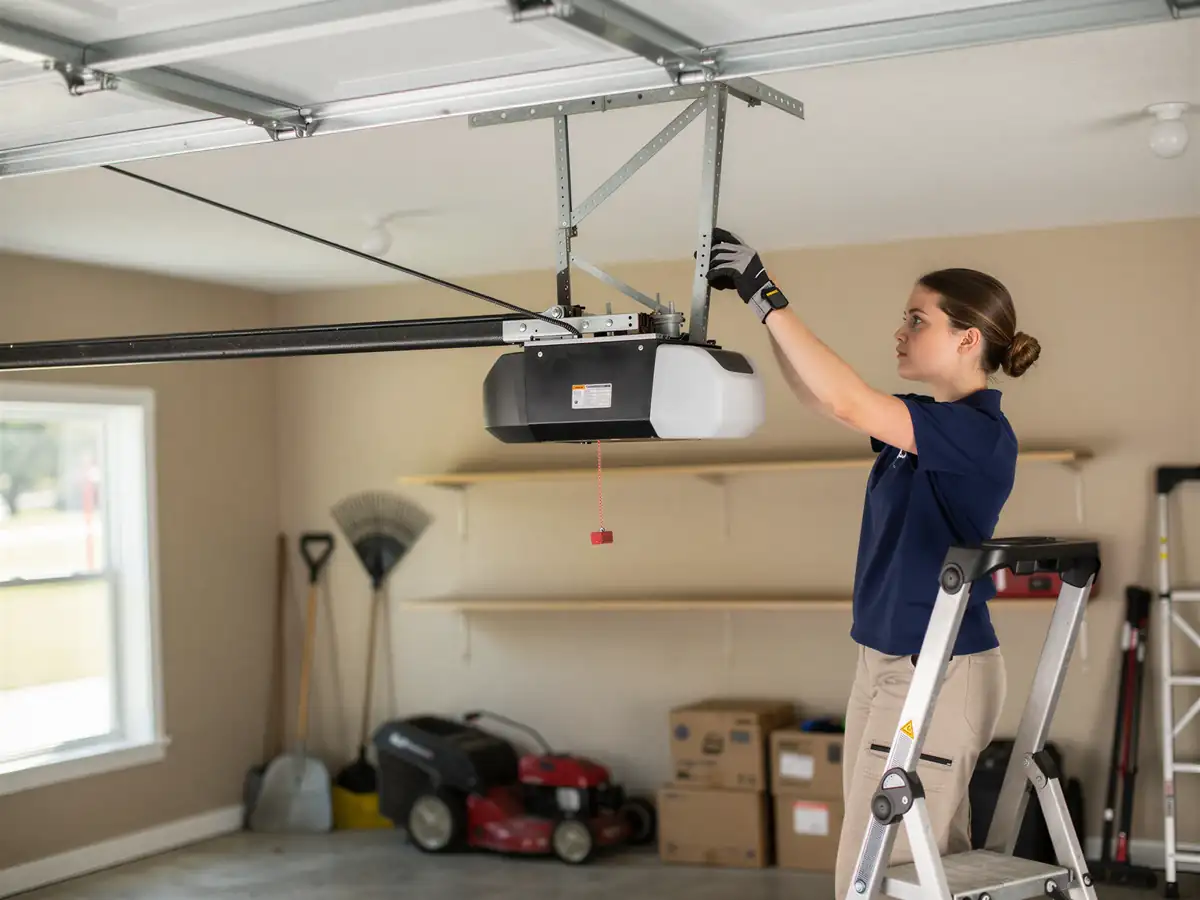
Steel from that era tends to be heavier gauge than what goes into newer doors, which is good for durability but hard on worn rollers - they grind instead of slipping quietly. We true the track, swap rollers where they've flattened, and check the opener's force setting against the heavier panel weight, since a modern opener bolted onto an old door often pulls harder than it should.
One limitation worth saying plainly
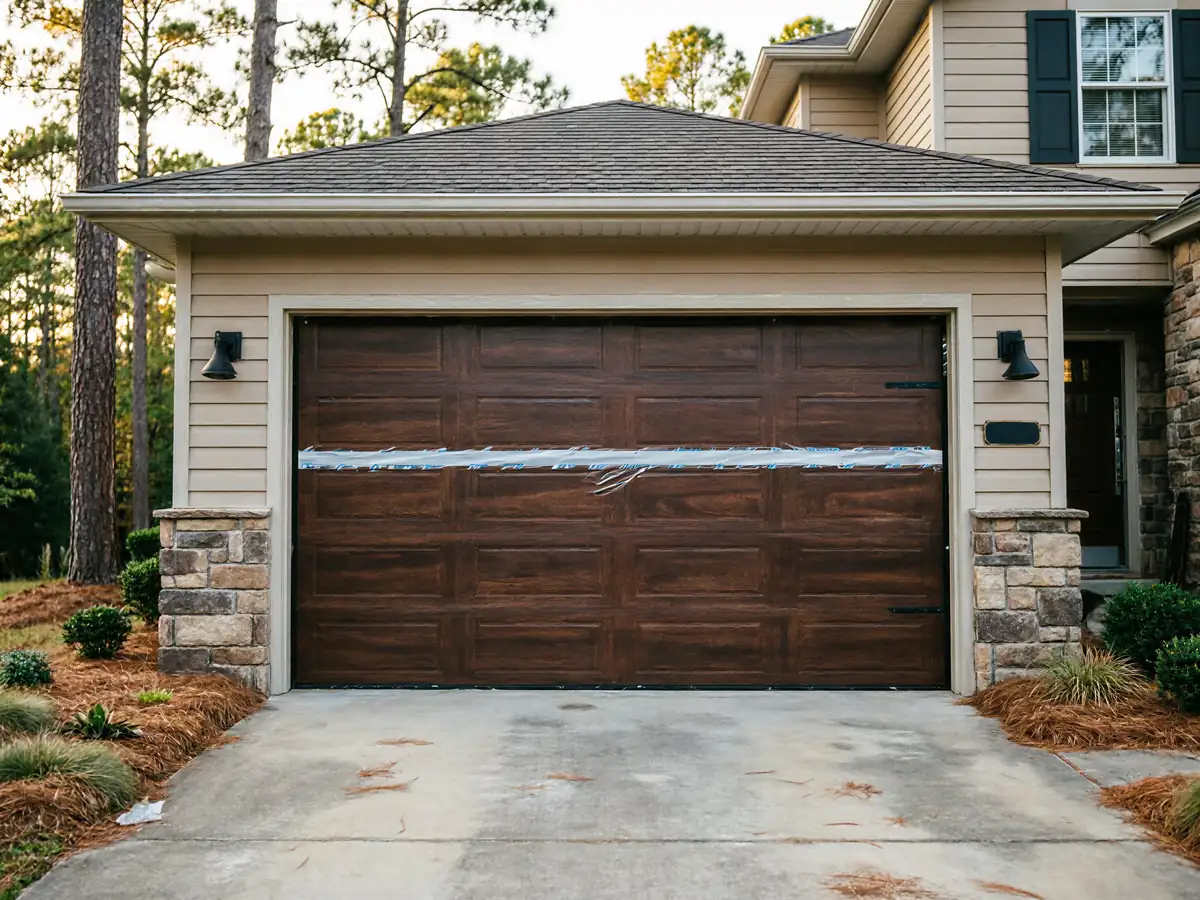
If the door itself has warped or rusted through at the bottom panel, we're not going to patch it and call it fixed. That's a replacement conversation, not a repair one, and we'll tell you straight when we're there.
How It Shows Up
The most common call we get from this part of town is a door that's gone heavy - it still opens, but the opener strains, or it drops the last foot instead of lowering smooth. That's usually a spring that's lost tension, and on a 1964-era door it's often an extension spring that's stretched out rather than snapped clean, which is why it doesn't always announce itself with a bang.
The second pattern is noise - a grinding or popping as the door travels, which points to rollers worn down after decades on the original track. Median household income in Druid Hills runs about $140,466, well above the $91,308 average across the rest of our coverage area, and we mention that only because it tends to mean doors here were maintained rather than run into the ground - the fault is usually wear, not neglect.
Less common but worth naming: openers original to the house, if they survived this long, sometimes fail at the gearbox rather than the circuit board. That's a different fix than a modern opener and we carry the parts for both.
Parts We Carry
Because the housing stock in our wider service area is mostly 1980s-90s, with Druid Hills and a handful of other pockets sitting noticeably older, we stock parts for both generations rather than assuming one. That covers extension springs and torsion springs, the brackets that mount each, and rollers sized for older heavier track as well as the lighter track common on newer builds.
We also carry standard cables, hinges, and the center and end brackets that wear out on any door regardless of age. What we don't keep on the truck is anything custom-sized - if a 1964 door needs a panel that's no longer made in that dimension, that's a special order, and we'll tell you the lead time once we've measured rather than guess over the phone.
For openers, we carry the common modern logic boards and remotes. If your original 1960s opener has failed outright, replacing it with a current unit is usually the faster and cheaper path than hunting parts for something that old.
How Long It Takes
Most spring and roller repairs on a Druid Hills door, once we're on site, run under two hours
The diagnosis is quick because the symptoms for this era of door are consistent. Getting there is the longer part of the job: it's 18 miles from Roswell, so we schedule the drive as part of the appointment, not an afterthought.
- 18 miles
If a part needs to be special-ordered
A panel, a specific gearbox, anything not on the truck - that adds days, and we'll give you a real number once we know what's needed rather than a guess. We'd rather tell you a job will take until next week than promise same-day and miss it.
For general information on the full range of garage door work we do in Druid Hills
See our area page. For details on how we run jobs out of our Roswell shop more broadly, see our Roswell repair page.