Can You Do This Yourself
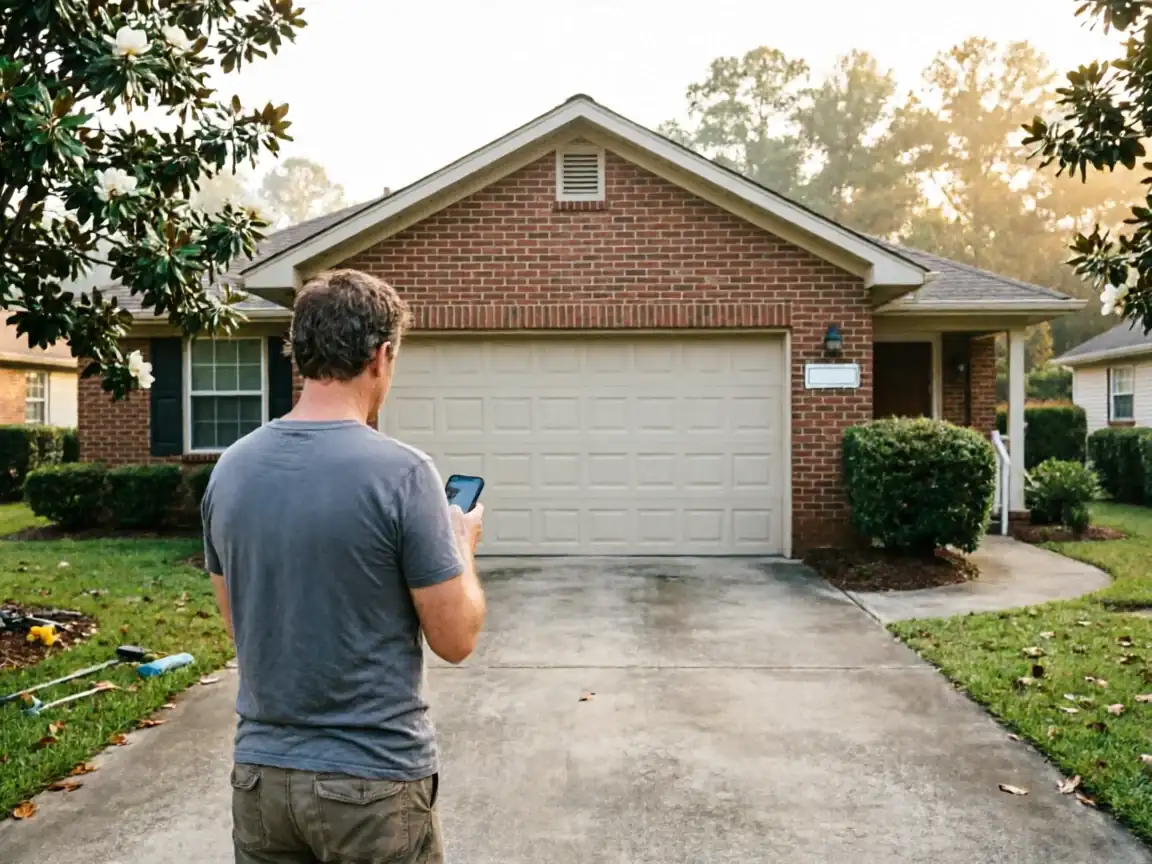
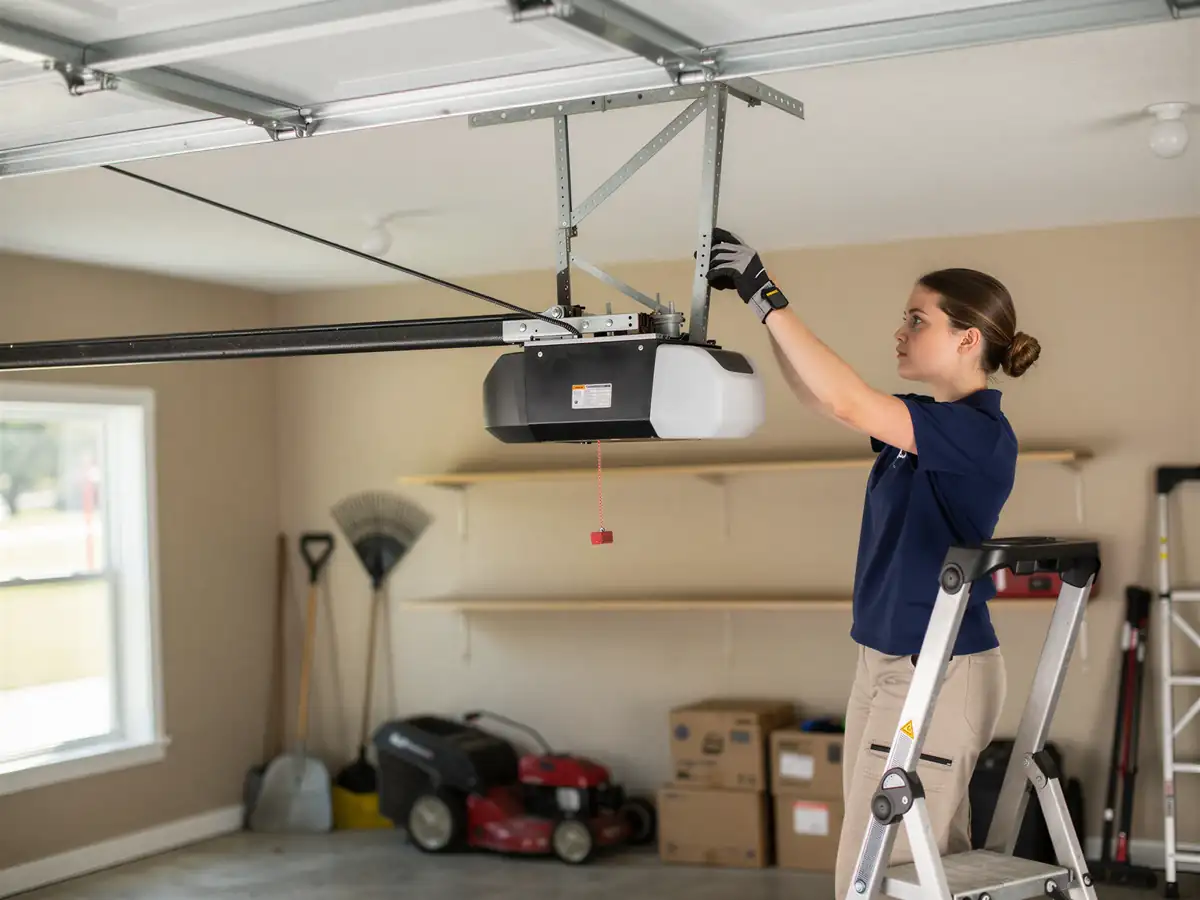
Brookhaven's housing stock centers on 1992, which puts most of these openers a full generation past the smart, Wi-Fi units going into new construction elsewhere. If your opener still runs on a wall button with no keypad and no app, that's original or close to it, and a lot of what's wrong with it isn't a settings problem - it's a worn part. You can reset a remote, change a light bulb, and check that the wall button's wires aren't chewed or loose. That's about where the safe DIY list ends. Opening the opener head to get at the gears or the circuit board means working near a wound spring and a door that can drop, and on a unit this old, the plastic drive gear is usually brittle enough to crack if you force anything. If the door reverses randomly, grinds, or the light flashes and won't run, that's a diagnosis job, not a tutorial job. One honest limit: if the logic board itself has failed on a unit this age, we're not always able to source an exact replacement board - sometimes the whole opener head has to go, and we'll tell you that up front instead of chasing a part that doesn't exist anymore.
What It Costs
We don't publish a flat number here because what a Brookhaven call actually costs depends on whether it's a sprocket and gear kit, a capacitor, or a full head swap because a board's gone. What we can tell you is the area's own numbers shape how we quote: household income here runs $117,448, well above the service-area median, and most of the 24,467 households in Brookhaven are long past the opener's first decade, so replacement parts for logic boards and motors on 1990s units aren't always cheap or fast to get. We price the job after we've seen which part failed and whether the part even still exists, not before. If a repair would cost close to half of a new opener, we'll say so instead of selling the repair anyway.
How We Fix It
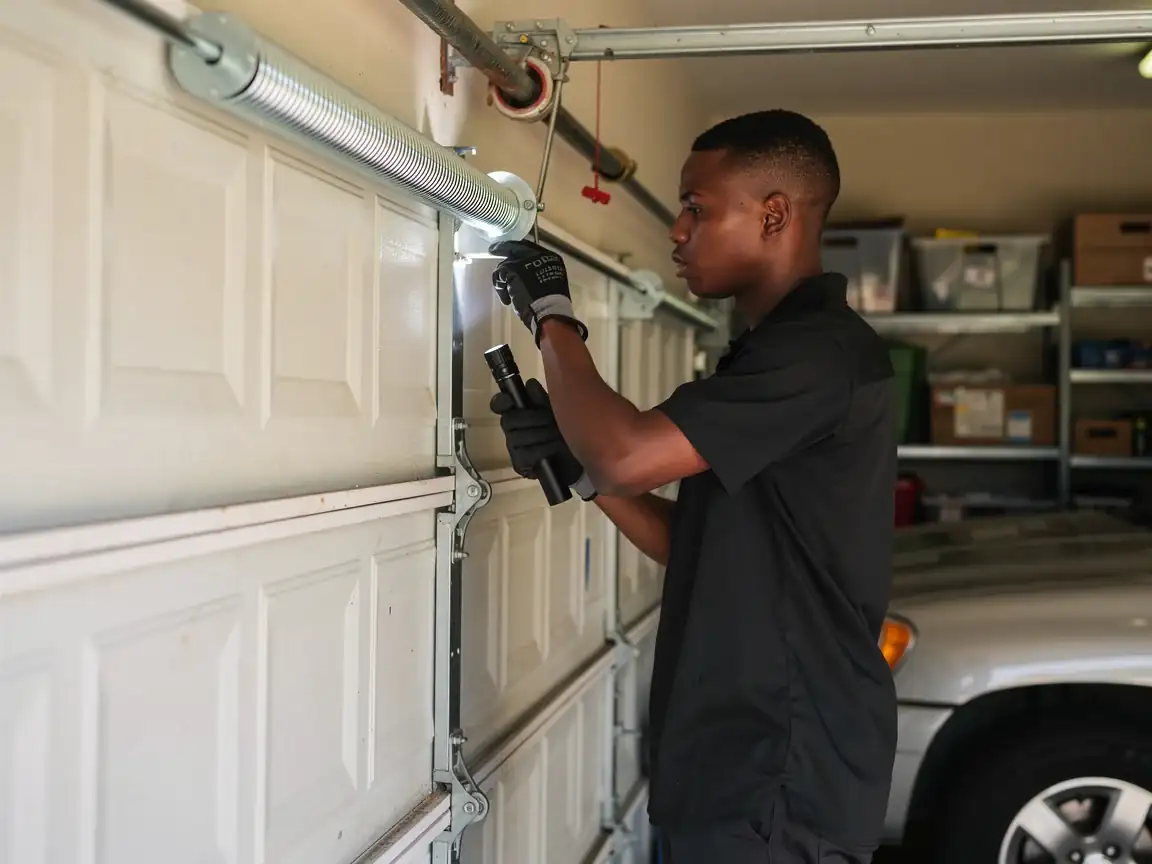
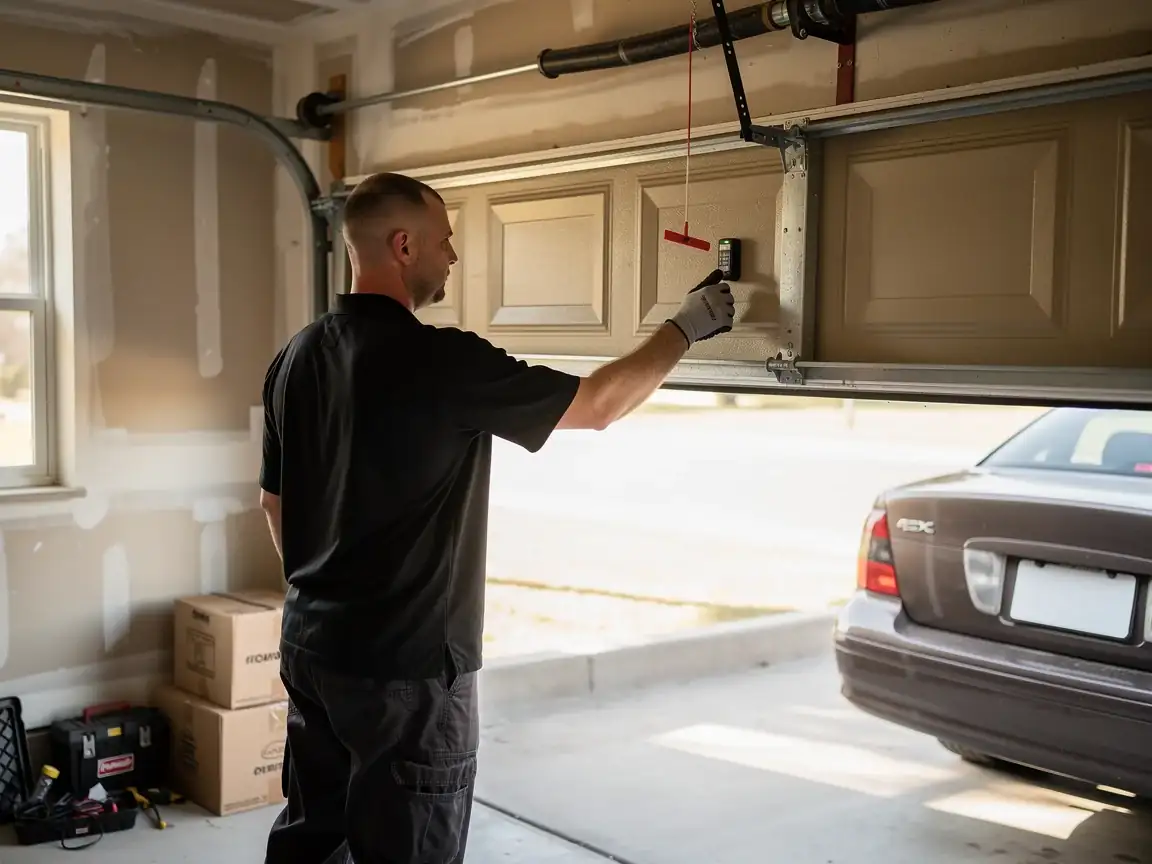
We start by running the opener through its full cycle and watching what it does - grinds on the way up, reverses on the way down, stutters at the same spot every time. That tells us whether it's mechanical (gear, sprocket, chain tension) or electrical (board, capacitor, wiring to the wall button or safety eyes). On a 1992-built home, we're checking the drive gear and sprocket first since that's the part worn hardest by three decades of cycles, then the capacitor if the motor hums but won't turn, then the board and wiring if the lights and logic are acting erratic. We test the safety reverse and the travel limits before we leave, because an opener that closes but doesn't stop on an obstruction isn't actually fixed - it's just quiet. We don't swap parts on guesswork; we confirm the failure first.